Summary
In 2026, the AI coding agent market is dominated by Cursor, Claude Code, and Codex. Now Meta (formerly Facebook) has entered the arena.
Muse Code Complete Guide 2026: Meta's Terminal Coding Agent & Muse Spark 1.2 Explained
"Curious about Meta's terminal coding agent and whether the Muse Spark 1.2 model behind it is any good?"
「Meta apparently released a coding agent... what can it do?」
In 2026, the AI coding agent market is dominated by Cursor, Claude Code, and Codex. Now Meta (formerly Facebook) has entered the arena.
"Muse Code" is a terminal-based coding agent released by Meta. Its underlying model, "Muse Spark 1.2," is the latest coding-focused model.
This article explains the full picture of Muse Code based on Meta's official announcement (research.meta.ai), in a beginner-friendly way.
Bottom Line: What Is Muse Code?
| Item | Detail |
|---|---|
| Developer | Meta AI (Meta Platforms) |
| Type | Terminal-based coding agent (beta) |
| Model | Muse Spark 1.2 (coding-focused model) |
| Install | curl -fsSL https://dev.meta.ai/install.sh | bash |
| OS | macOS / Linux |
| Key Feature | Orchestrates multiple persistent subagents to autonomously handle complex tasks in large repositories |
| Availability | Muse Code + Meta Model API (expanding global access) |
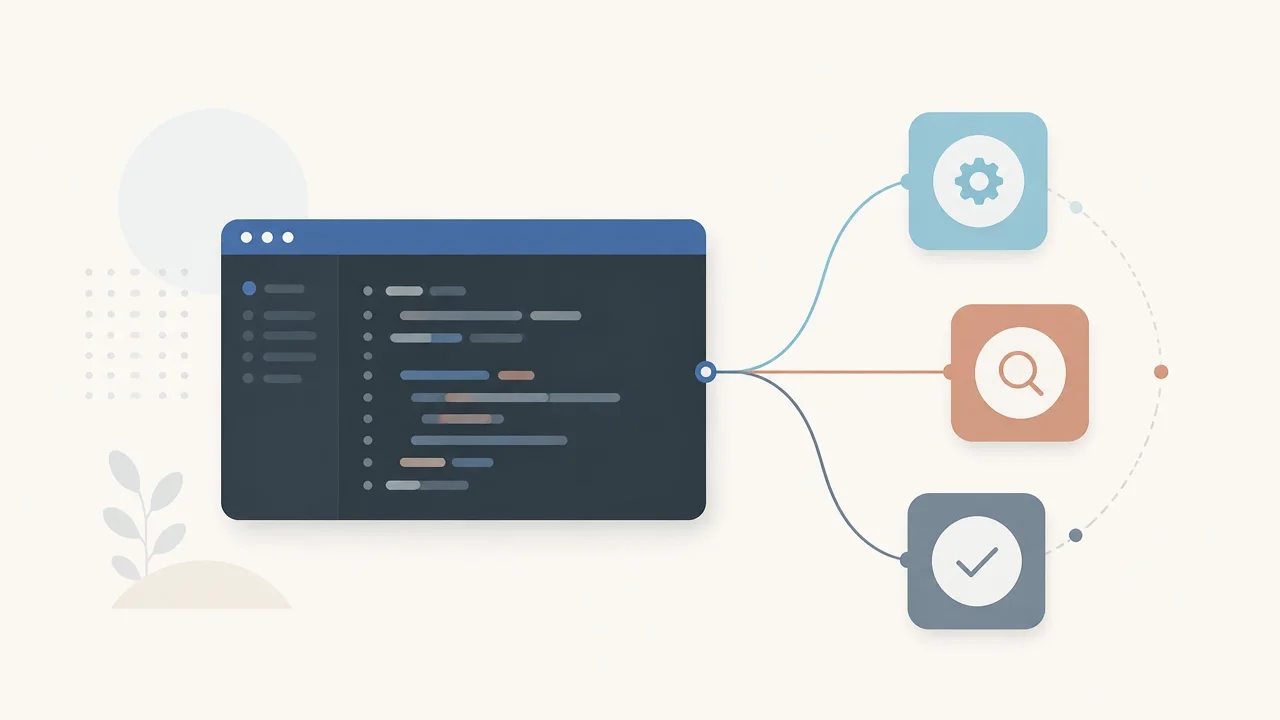
Muse Code is a terminal agent that autonomously handles complex software engineering tasks in large repositories — from planning, coding, to validation.
Muse Code's 3 Core Technologies
① Async Background Agents
Muse Code's biggest feature is background agents that stay active throughout the session.
Typical agents "spawn an agent per task, then terminate it." Muse Code instead keeps dedicated background agents resident to assist the main agent.
Benefits:
- No redundant information gathering: reused across the session, so the same research isn't repeated
- Lower latency: resident agents have zero startup cost
- Less intervention: hard multi-step tasks don't require fine-grained human steering
② Runtime Design
Muse Code uses a local event log. Every model call, tool run, approval, and edit is appended to the log, acting as thesingle source of truth.
What this means:
- Replay-exact: past behavior can be reproduced precisely
- Restart-safe: even after a crash, the agent resumes exactly where it stopped
- Resilient to long tasks: failures don't derail progress
In other words, Muse Code's strength is the ability to tackle long, complex tasks with a design that's "safe even if something fails."
③ Bundled Skills
Muse Code ships with useful default skills.
| Skill | Function |
|---|---|
| /plan | Turns a task into an approval-gated plan |
| /grill | Stress-tests the plan until it holds up |
| /goal | Works toward successful completion of the specified objective |
Muse Spark 1.2: The Latest Coding-Focused Model
The model powering Muse Code is Muse Spark 1.2, a coding-focused update to Muse Spark 1.1.
Key Improvements
- Code generation: more accurate, more natural code
- Complex debugging: significantly better at identifying and fixing hard bugs
- Codebase understanding: strong at grasping large repository structures
- End-to-end developer workflows: handles the entire development lifecycle consistently
Training highlights: Meta significantly scaled up training compute on coding tasks while expanding training environment diversity — while maintaining strength in other key areas like general agents.
Benchmarks
Meta's official announcement compares against major coding models on:
- Terminal-Bench 2.1: accuracy on terminal operation tasks
- DeepSWE 1.1: software engineering capability
- Meta Internal Coding Bench: Meta's internal coding benchmark
※ Exact scores are published in Meta's evaluation report (research.meta.ai/static/muse-spark-1-2-methodology). As of writing, they are published as charts, so check the official report for the latest numbers.
Co-Training with Muse Code
Importantly, Muse Spark 1.2 was trained together with Muse Code:
- Rejection-sampled harness trajectories
- Recipe optimizations for goals, compaction, and subagents
- Integration of the Muse Code toolset
In other words, it's a model optimized to deliver peak performance in the Muse Code environment.
Long-Horizon Tasks
Muse Spark 1.2 was extensively trained on long-horizon coding tasks:
- Whole-repository generation
- Large end-to-end projects
- Auto-research
It uses planning to sequence work, goal conditioning to maintain direction, and context compaction to retain knowledge.
Self-Improvement
Even more interesting is the self-improvement loop:
- The older model (Muse Spark 1.1) generates challenging coding environments and instruction-following templates
- The model grades candidate solutions
- This builds a scalable training dataset
Through this loop, Muse Spark 1.2 follows complex instructions more precisely than its predecessor.
Case Study: GPU Kernel Optimization (1000+ Tool Calls, 24 Hours)
Meta published a case study demonstrating Muse Code's capability.
Task: Iteratively optimize KDA and MLA kernels for NVIDIA Hopper GPUs over 1,000+ tool calls (up to 24 hours).
What it did:
- Write → compile → profile → improve performance
- Achieved substantial improvements over the provided baseline (FLA's Triton implementation)
Notably:
- Directly importing third-party kernel libraries (like FLA) was prohibited
- The agent had to apply specialized kernel-optimization knowledge to implement algorithms in Triton
- Example: combining a chunk-parallel preparation kernel with a sequential inter-chunk scan, applying KDA-specific optimizations (re-centering gated cumulative decay at the chunk midpoint)
This is a powerful demo showing Muse Code can autonomously execute specialized hardware optimization tasks for 24 hours.
How to Use Muse Code
Installation (macOS / Linux)
curl -fsSL https://dev.meta.ai/install.sh | bash
That's it — one command and Muse Code is ready in your terminal.
Real-World Example
In Meta's official demo, feeding a fly-through video of a home (mp4) into the terminal caused Muse Code to interpret the footage and automatically generate a premium vacation-home booking page.
That means:
- Interpretation of multimodal inputs (video, images)
- Website design, coding, and finishing
- All executed autonomously by a single agent
Pricing & Access
- Muse Code: get started at dev.meta.ai (beta)
- Muse Spark 1.2: accessible via Meta Model API (expanding global access)
※ Check the official site for pricing details.
Summary: Meta Has Seriously Entered the AI Coding Agent War
With Muse Code, the AI coding agent war enters a new phase.
| Agent | Developer | Strength |
|---|---|---|
| Cursor | Anysphere | AI-native IDE, best UX |
| Claude Code | Anthropic | Strongest plan+validate loop |
| Codex | OpenAI | Best GitHub integration |
| Hermes Agent | Nous Research | Fully OSS, economic activity |
| Muse Code | Meta | Resident background agents, best for long tasks |
Muse Code's unique position is "resident async background agents" and "a runtime design that resumes precisely after crashes." It excels especially at long-horizon autonomous tasks.
Meta has announced "larger and much more capable models on the way," so future updates are exciting.
Install it with one command and try it yourself.
👉 Official site: dev.meta.ai 👉 Official announcement: research.meta.ai/blog/introducing-muse-code-and-muse-spark-1-2 👉 Evaluation report: research.meta.ai/static/muse-spark-1-2-methodology
Related Reading
- AI Coding Agent Complete Comparison 2026: Cursor vs Claude Code vs Codex vs Hermes vs Fugu
- Hermes Agent Complete Guide 2026: The Most Powerful Open-Source AI Agent by Nous Research
- SWE-1.7 Complete Guide: The AI Engineer That Codes at 1000 Tokens/sec
- Agents-A1 (35B MoE) Complete Guide 2026
- Qwen-AgentWorld Complete Guide: Predicting Environments Instead of Actions
Related reading
Share this article
Related articles
Sep 2, 2026
Meta Muse Spark 1.3 Complete Guide 2026: The Coding AI That Hit 75.4 DeepSWE, Beating Opus 5
Aug 10, 2026
Meta Muse Glimmer Complete Guide 2026: The 30B Open-Weight Model That Changes Local AI Agents
Sep 7, 2026
Meta 'Muse Spark 1.3 max' Is Now Public: Ties Claude Opus 5 on the Coding Agent Index (September 2026)
Aug 14, 2026
Hermes Agent Bot Mode Complete Guide 2026: Turn Your AI Agents into a Team of Named Bots with Roles, Models, Memory, and Avatars
Aug 26, 2026
Perplexity "Portable Computer" Explained 2026: The Local-First AI Agent (Including the "DGX Spark Isn’t an Ordinary PC" Criticism)
Aug 5, 2026
Cloudflare Wallets Complete Guide 2026: The New Payment System Where AI Agents Pay Automatically, Explained for Beginners