Summary
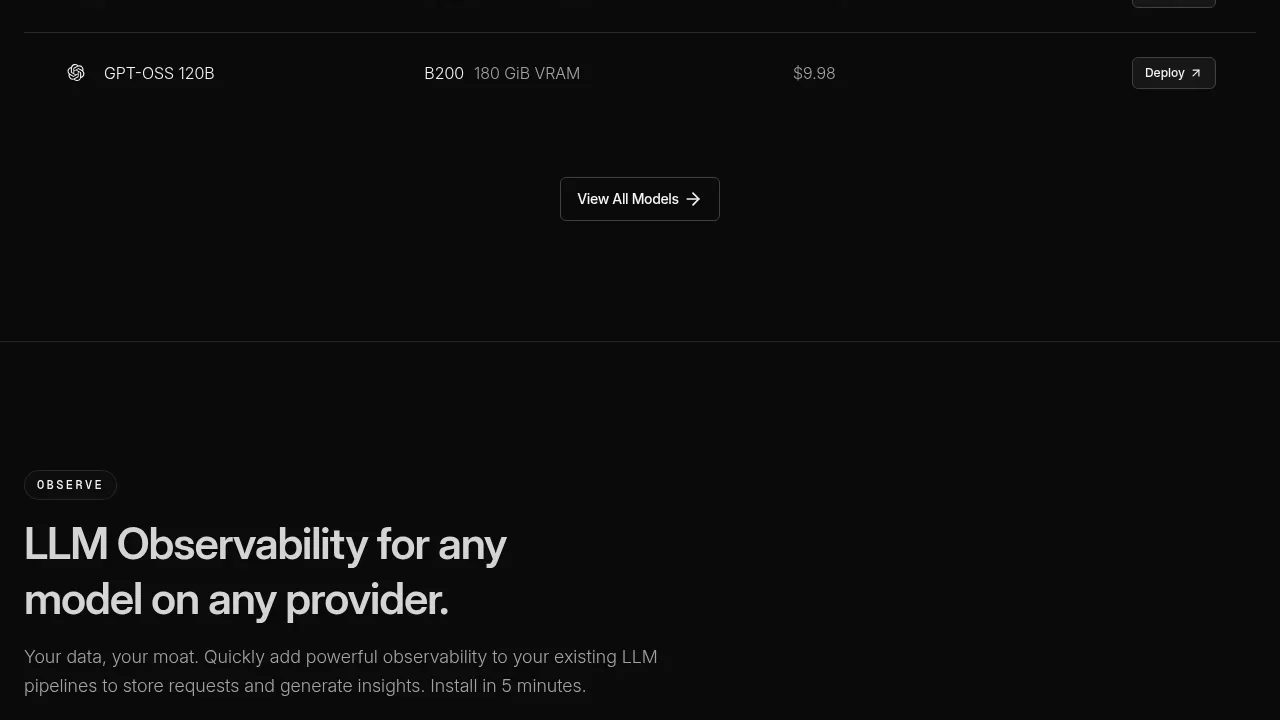
On July 12, 2026, Sam Hogan, CEO of AI inference infrastructure company inference.net, announced a new feature called Inference AutoTune, shocking the AI industry.
Inference AutoTune Complete Guide: Frontier AI Distilled with 25 Lines of Code — Cut Costs by 90% (2026 Guide)
"Want to stop paying GPT-5.5 or Claude Opus per call and instead automatically create small, fast models for your specific task?"
"You don't need to call GPT-5.5 or Claude Opus every time — the era of automatically creating small, fast, specialized models has arrived."
On July 12, 2026, Sam Hogan, CEO of AI inference infrastructure company inference.net, announced a new feature called Inference AutoTune, shocking the AI industry.
The contents are remarkable:
- ✅ GPT/Claude-class models → auto-distilled into small task-specific SLMs
- ✅ Implemented in just 25 lines of code
- ✅ Training time ~2 hours, costunder $250
- ✅ 90%+ reduction in cost and latency
- ✅ Auto-detects schema changes → auto-retrains
- ✅ The finished model weights are completely yours
In other words, it's a revolutionary tool for AI operations: "replace your GPT-powered processes with a dedicated small AI and cut costs to 1/10."
In this article, we explain the whole picture in beginner-friendly terms.
What Is Inference AutoTune? In 3 Lines
| Item | Details |
|---|---|
| In one sentence | A tool that automatically converts large AI models into small, task-specific AIs |
| Developer | inference.net (CEO: Sam Hogan) |
| Status | Private beta (from July 2026) |
| Code needed | Just 25 lines |
| Training time | ~2 hours |
| Training cost | Under $250 |
| Effect | 90%+ reduction in cost and latency |
| Ownership | Model weights fully owned by the user |
Why Is This Needed? Solving the "AI Is Too Expensive" Problem
Many companies and developers use AI today, but there's a big problem:
AI features running in your company:

"Categorize customer inquiries"
→ calls GPT-5.5 every time → $0.05 per call

"Extract customer info from order data"
→ calls Claude Opus every time → $0.08 per call

"Sentiment analysis of reviews"
→ calls Gemini 3 every time → $0.04 per call

1M requests per month → $50,000–$80,000/month 😱
But most of these tasks can be handled perfectly well by much smaller models.
For example, a task like "extract name and age from text" can be done by a 1–3B small model with accuracy equal to GPT.
The problem was that training and operating small models was a hassle. When the schema changes, retraining is needed, and managing that was painful.
Inference AutoTune automates all of that "hassle."
How Does It Work?
Traditional approach (without AutoTune)
1. Generate lots of data with GPT
2. Manually clean the data
3. Choose and train a small model
4. Evaluate and tune
5. Deploy
6. When the schema changes → start over from 1 😭
With AutoTune
1. Write 25 lines of code ← that's it!
2. Everything else is automatic
   ├── Auto-generate training data from production data
   ├── Training sweep across multiple base models
   ├── Auto-select the best model
   ├── Auto-route production traffic
   └── Auto-retrain when schema changes are detected
Actual Code Example
The actual code is this simple:
import { createAutoTuneClient } from "@inference/sdk";
import { z } from "zod";

// Define the schema of the data you want to extract
const PersonSchema = z.object({
  name: z.string(),
  age: z.number(),
});

// Just this enables auto-training + auto-routing!
const extractPerson = createAutoTuneClient({
  task: "extract-person",
  teacher: "z-ai/glm-5.2",        // teacher model (frontier model)
  schema: personSchema,
  prompt: "You are a helpful assistant that extracts people from text",
  config: {
    minSamples: 10_000,            // minimum sample count
    autoTrain: true,               // auto-training ON
    autoRoute: true,               // auto-routing ON
  },
  apiKey: process.env.INFERENCE_API_KEY,
});

// Use it like a normal function call!
const person = await extractPerson.run({
  input: "Hello, my name is John and I am 30 years old.",
});
// → { name: 'John', age: 30 }
That's all it takes. Under the hood, this process runs automatically:
- Production requests are handled by the teacher model (GLM-5.2, etc.) → data accumulates
- Auto-training starts once 10,000+ samples accumulate
- Trains across 3–4 base models, selects the best
- When training completes, traffic auto-routes to the small model
- Detects schema or prompt changes → switches back to teacher model and retrains
Cost Comparison
| Item | Traditional (GPT/Claude) | AutoTune (small SLM) | Savings |
|---|---|---|---|
| 1M requests/month | $50,000–$80,000 | $2,000–$5,000 | 90–97% reduction |
| Latency | 500ms–3s | 50ms–200ms | 5–10× faster |
| Model training cost | Hundreds of thousands to millions $ | Under $250 | 99.9% reduction |
| Operations and maintenance | Manual (high effort) | Automatic (near zero) | 90% effort reduction |
| Vendor lock-in | Yes (API dependency) | No (you own the weights) | — |
What Tasks Can It Handle?
AutoTune works for "single-shot LLM tasks" in general.
| Task type | Example | Difficulty |
|---|---|---|
| Data extraction | Extract name, age, address from text | ★☆☆☆☆ |
| Classification | Categorize emails (inquiry/complaint/billing) | ★☆☆☆☆ |
| Sentiment analysis | Positive/negative review detection | ★★☆☆☆ |
| Summarization | Summarize long text into 3 lines | ★★☆☆☆ |
| Content moderation | Auto-detect inappropriate posts | ★★★☆☆ |
| Structured data conversion | Convert natural language to JSON | ★★☆☆☆ |
| Routing | Route inquiries to the right department | ★★☆☆☆ |
| Entity recognition | Extract product names, amounts, dates | ★★★☆☆ |
How the Self-Improvement Loop Works
AutoTune's biggest strength: it doesn't just "build once and done" — it "gets smarter the more you use it."
① Production operation starts
   ↓
② Teacher model (large AI) handles requests
   ↓
③ Data accumulates (minimum 10,000 samples)
   ↓
④ Auto-training starts (sweep across 3–4 models)
   ↓
⑤ Best small model auto-deployed
   ↓
⑥ Traffic automatically switches to the small model
   ↓
⑦ Cost and latency cut by 90%!
   ↓
⑧ Detects schema or prompt changes
   ↓
⑨ Automatically switches to teacher model and retrains
   ↓
⑩ Back to ② (self-improvement forever)
This loop runs completely automatically, forever.
About inference.net (the company)
inference.net provides decentralized, low-cost AI inference infrastructure. Services include:
- OpenAI-compatible API — use your existing code as-is
- Model hosting — open-source and fine-tuned models
- Tracing and monitoring — visualize LLM calls
- Catalyst platform — integrated environment for building self-improving AI models
Catalystis the overall platform, andAutoTune is the latest evolution of its core feature.
Existing customer workloads handle 100M+ requests per month.
How to Get Started (Joining the Private Beta)
AutoTune is currently offered as a private beta.
1. DM Sam Hogan (@samhogan) on X
2. Or contact via the inference.net site
3. Once granted access, install the SDK

# SDK installation
npm install @inference/sdk

# Then just write 25 lines of code!
Questions Readers Ask
Who owns the trained model?
→ You do. Model weights are fully owned by the user. No vendor lock-in.
What base models are used?
→ A training sweep runs across 3–4 candidates (open-source models), and the best-performing model is auto-selected.
Does it support Japanese?
→ Yes. If the teacher model supports Japanese, the small model learns Japanese too.
How much data is needed?
→ At least 10,000 samples is the guideline. For an already-running production system, that's a few days' worth.
How exactly are schema changes detected?
→ Changes in prompts or output formats (like JSON schemas) are auto-detected. When detected, it automatically switches to the teacher model and starts the retraining loop.
How is this different from inference.net's normal API?
→ The normal API "calls a large model every time." AutoTune "uses a large model only initially, then auto-operates a small model." The result: dramatically lower costs.
Summary
Inference AutoTune is a revolutionary tool that solves AI's "too expensive" problem.
- ✅ Run GPT/Claude-class performance at 1/10 the cost
- ✅ Implementation in just 25 lines of code
- ✅ Auto-detects schema changes and retrains automatically
- ✅ Model weights are yours
"Continuously auto-building small, fast, cheap AIs" — this could become the new standard for AI operations in 2026.
If you're interested, DM Sam Hogan and join the private beta.
👉 inference.net official: https://inference.net 👉 Catalyst docs: https://docs.inference.net 👉 Sam Hogan (X): https://x.com/samhogan
Recommended Reading
- Claude Fable 5 Financial Guide: Protecting Your Assets with AI Agents
- Cloudflare Monetization Gateway Complete Guide
- A Fable of Codexes Complete Guide: Building an AI Worker Army Led by Claude
- GPT-Live Complete Guide: OpenAI's Full-Duplex Voice AI
- Using component.gallery to Dramatically Improve AI UI Generation
Related reading
Share this article
Related articles
Jul 7, 2026
Fable Advisor Complete Guide — Master Claude Code Model Routing to Cut Costs by 60% (2026)
Jun 23, 2026
Blueprint.am Complete Guide 2026: "Claude for Hardware" Auto-Generates Wiring Diagrams, BOMs, and Assembly Instructions
Jul 16, 2026
Blender MCP with Hermes Agent Complete Guide 2026: AI-Powered 3D Modeling for Beginners — Full Setup Walkthrough

Jul 4, 2026
Unreal Engine MCP Complete Guide 2026: Using UE5.8 AI Integration with Hermes Agent & Claude Code for Beginners
Aug 12, 2026
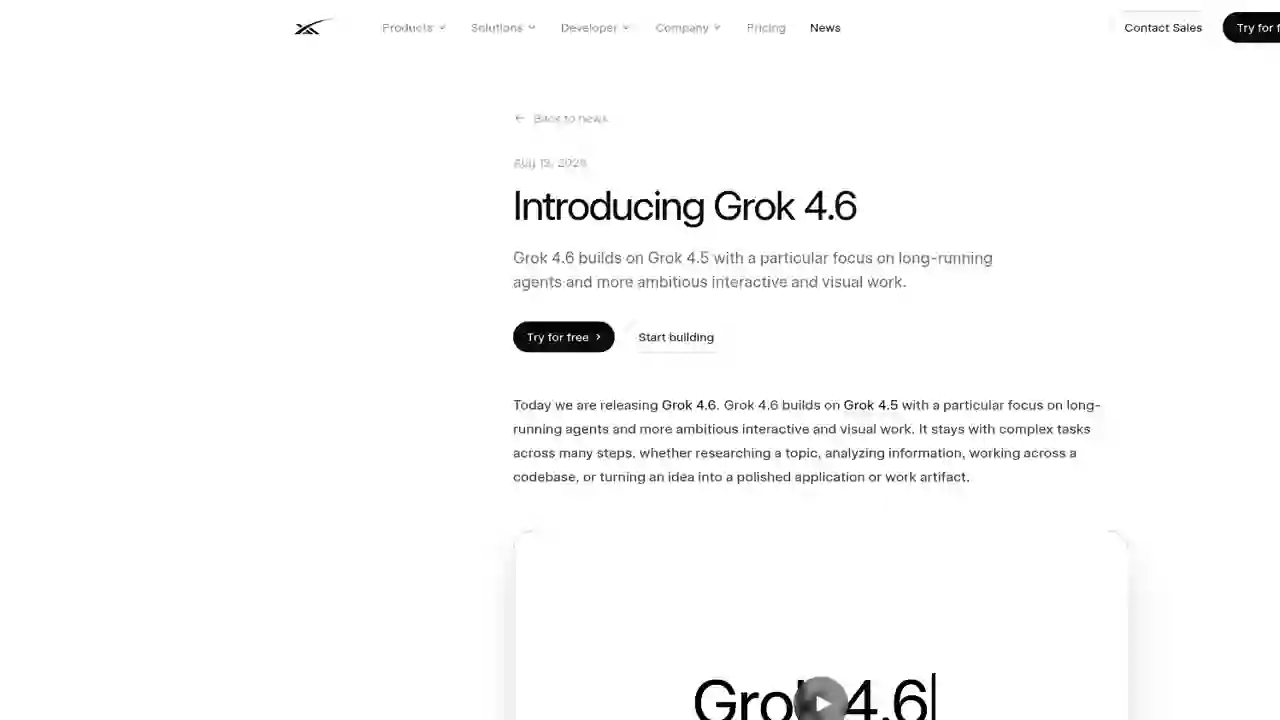
Grok 4.6 Complete Guide 2026: The Latest Frontier-Intelligence Model at the Same Price, Compared with Official Benchmarks
Jun 30, 2026
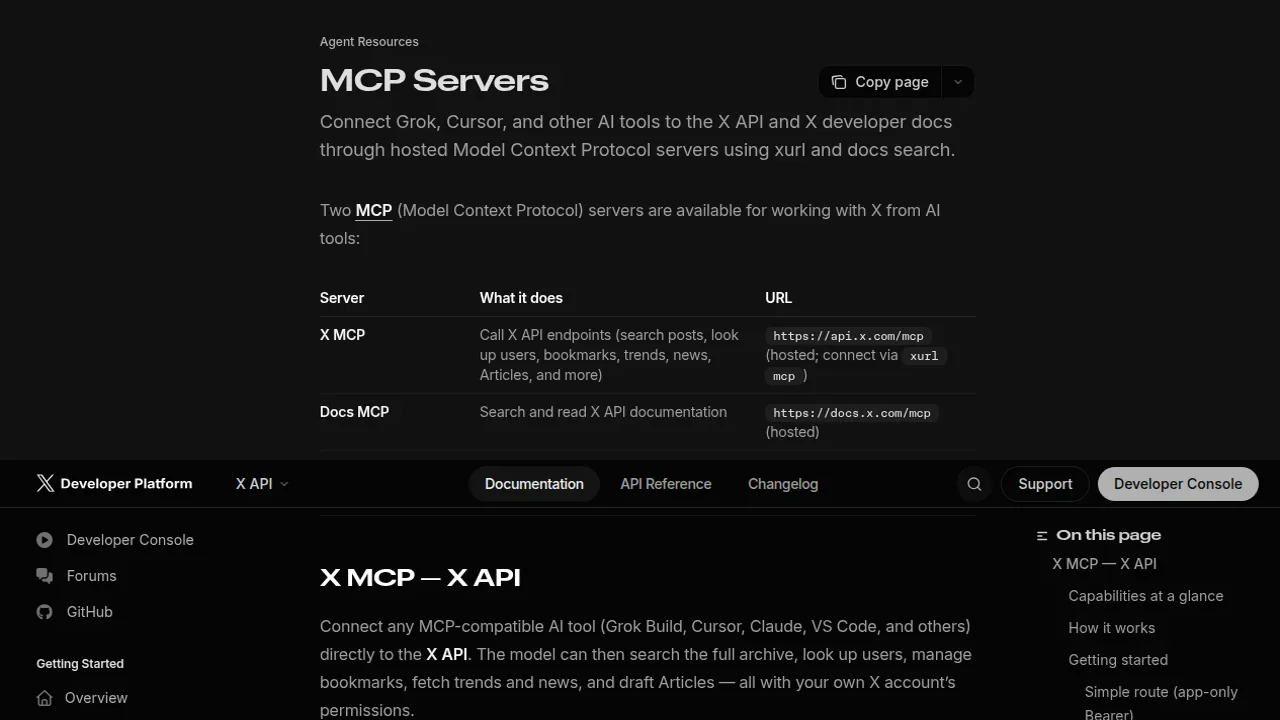
X (Twitter) Official MCP Complete Guide 2026: Automate Search, Posting & Trend Fetching with AI Agents