Summary
That's a common dilemma. The good news: top-tier universities, companies, and researchers are publishing AI agent courses completely free right now.
12 Free AI Agent Courses Recommended for 2026: Learn from the World's Top Instructors
"Want to really master AI agents but can't justify paying for expensive courses or deciding which one to take?"
"I want to truly master AI agents. But paid courses are expensive, and I don't know which one to choose…"
That's a common dilemma. The good news: top-tier universities, companies, and researchers are publishing AI agent courses completely free right now.
@systemdesignone — known on X for system design and AI content — compiled "12 free courses to become a GOAT-level AI agent engineer," and it went viral. In this article, we break down all 12 courses one by one, with real screenshots.
Here's what you'll learn:
- Which course fits you (beginner / implementation-focused / university-level)
- The real features and content of each course
- The optimal "learning order" to master agents efficiently
12 Courses at a Glance
First, here's an overview table of all 12 courses. Click a course name to visit its official site.
| # | Course | Provider | Level | Format | Language |
|---|---|---|---|---|---|
| 1 | [object Object] | Hugging Face | Beginner–Int. | Interactive + certificate | English |
| 2 | [object Object] | Microsoft | Beginner | GitHub repo + videos | English |
| 3 | [object Object] | DeepLearning.AI (Andrew Ng) | Beginner | Short videos | English |
| 4 | [object Object] | UC Berkeley | Int.–Adv. | University lectures | English |
| 5 | [object Object] | UC Berkeley | Advanced | University lectures | English |
| 6 | [object Object] | Kaggle × Google | Intermediate | 5-day intensive + code | English |
| 7 | [object Object] | LangChain Academy | Intermediate | Interactive | English |
| 8 | [object Object] | Anthropic | Intermediate | Videos + hands-on | English |
| 9 | [object Object] | Hugging Face | Beginner–Int. | Interactive + certificate | English |
| 10 | [object Object] | Microsoft | Beginner | GitHub repo + samples | Multilingual |
| 11 | [object Object] | Anthropic (GitHub) | Intermediate | Jupyter Notebook | English |
| 12 | [object Object] | Kaggle × Google | Beginner–Int. | 5-day intensive + papers | English |
Conclusion: Beginners should follow "2 → 3 → 1"; those building implementation skills should try "7 → 9 → 11"; those who want deep theory should do "4 → 5." Details are in the "Learning Order" section below.
Detailed Breakdown of Each Course
1. Hugging Face AI Agents Course
Provider: Hugging Face (the world's largest AI model sharing platform)
From agent fundamentals to building a working project and earning a certificate — all free. Using lightweight frameworks like SmolAgents, it's hands-on from the start.
▶ View the course on the official site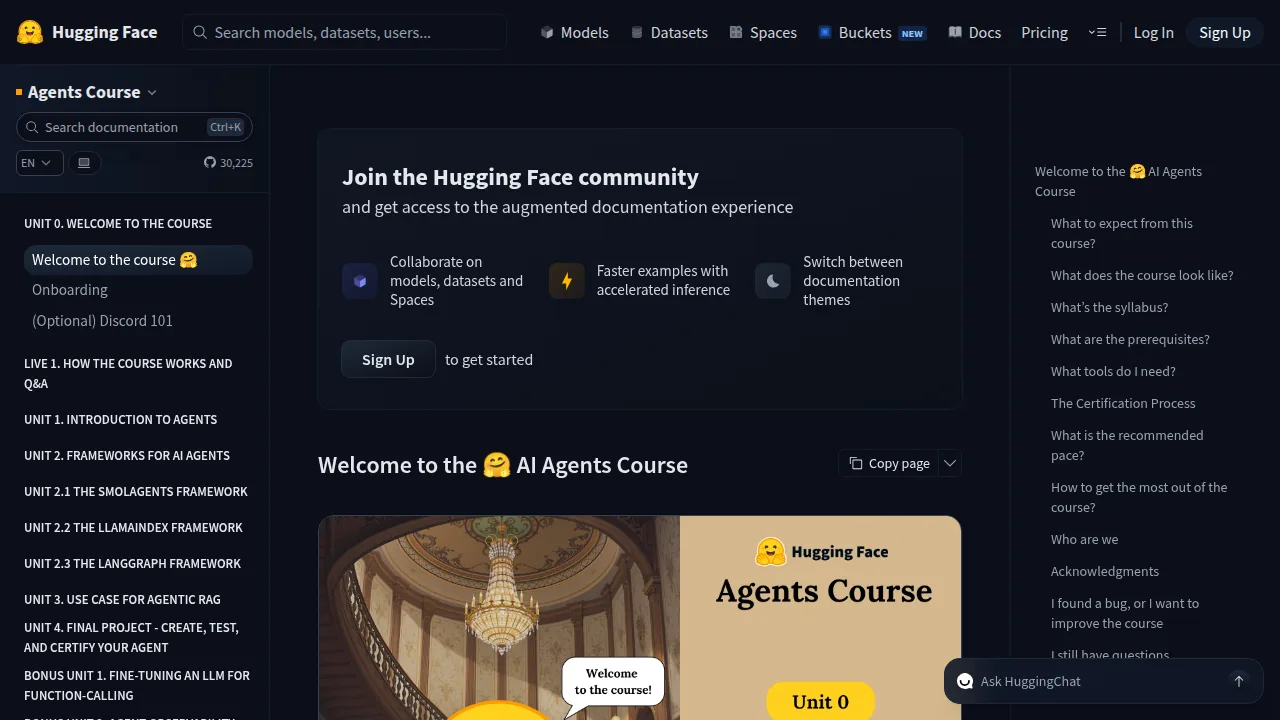
- What you learn: Agent basics, tool calling, code-executing agents, shared tasks
- Best for: Hands-on people who "just want to build something that works"
- Pros: Interactive with visible progress. Certificate included
- Cons: English-centric. Self-driven effort needed even at entry level
2. AI Agents for Beginners (Microsoft)
Provider: Microsoft
A 10-lesson intro course for "people about to learn AI agents." Python code samples + explanatory videos, published on GitHub.
▶ View the official GitHub repo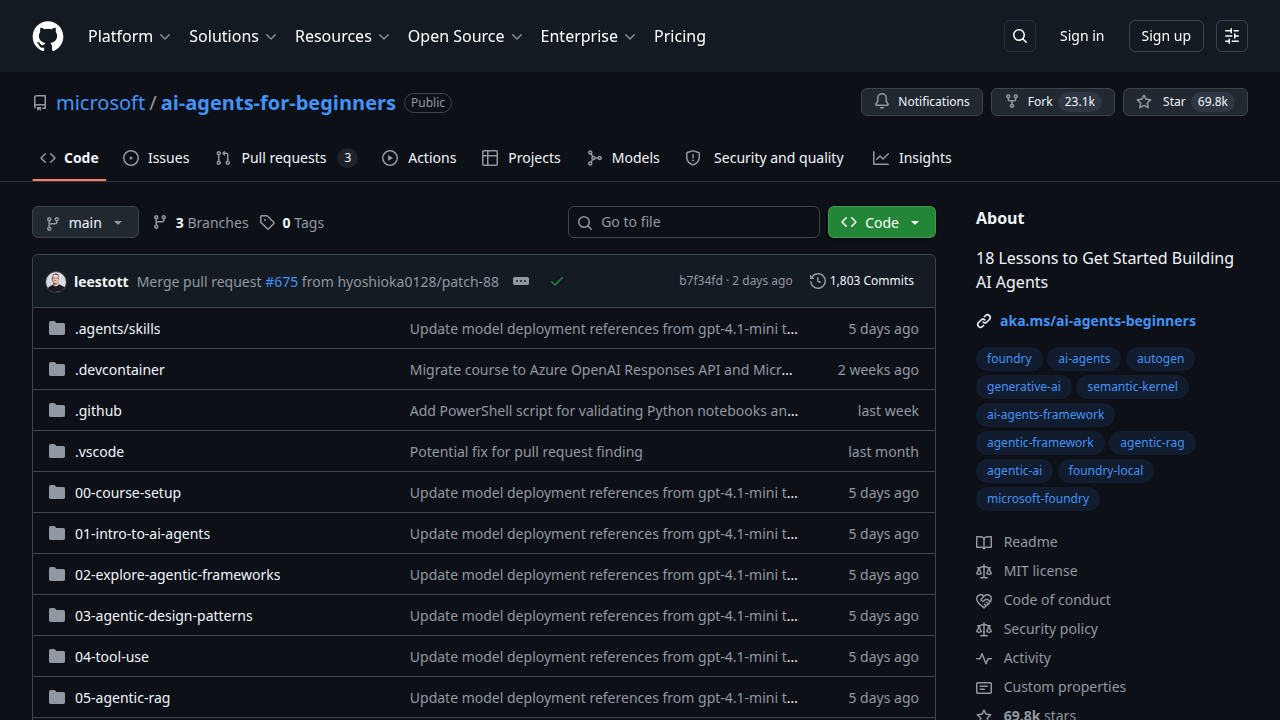
- What you learn: Agent design basics, multi-agent, RAG integration, orchestration
- Best for: Beginner-to-intermediate programmers, those interested in Microsoft tech
- Pros: Very thorough with code. Community Japanese translations exist
- Cons: Understanding skews toward Microsoft frameworks (Semantic Kernel / AutoGen)
3. Agentic AI (Andrew Ng)
Provider: DeepLearning.AI (Andrew Ng)
A short course from AI legend Andrew Ng. Learn the 4 core agent design patterns — reflection, tool use, planning, and multi-agent collaboration — compactly.
▶ View the course on the official site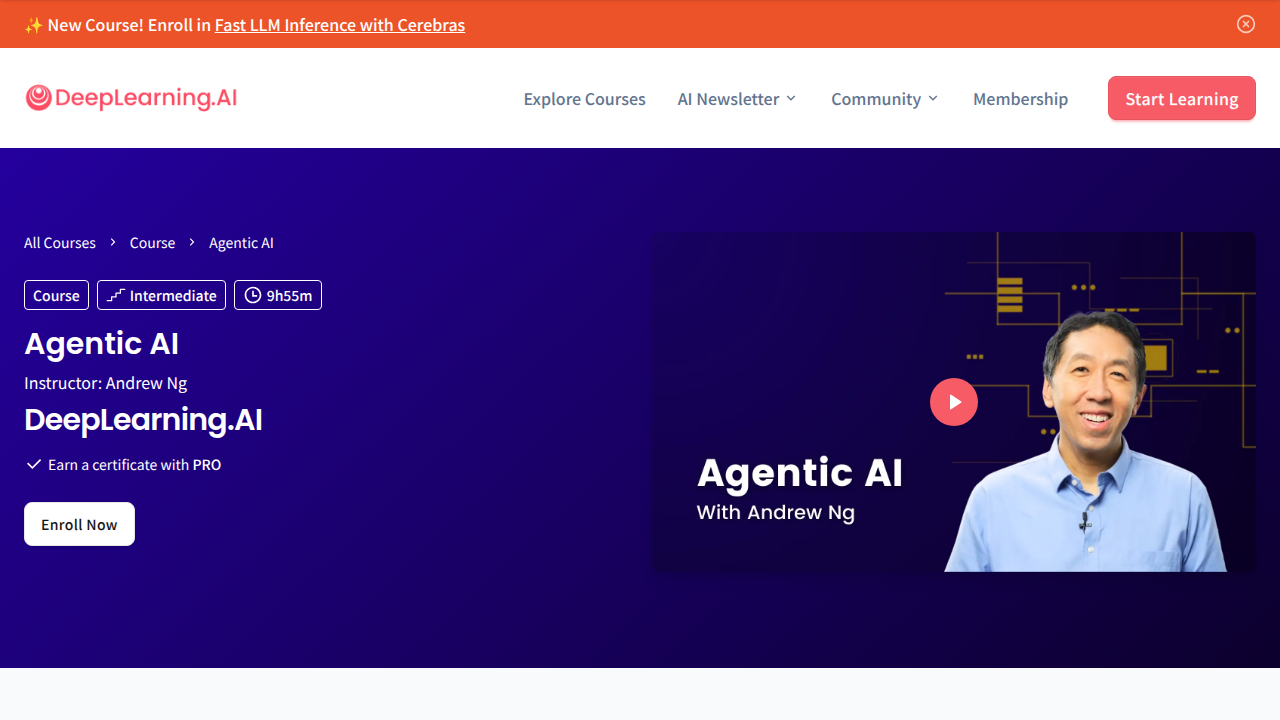
- What you learn: The 4 design patterns, implementation mindset
- Best for: Busy people who "want the big picture and the 'way of thinking' in one hour"
- Pros: Short. Pure essentials
- Cons: Doesn't cover deep implementation
4. UC Berkeley LLM Agents MOOC
Provider: University of California, Berkeley
University-level lectures from top researchers. The Fall 2024 (f24) public curriculum covers paper-based cutting-edge topics.
▶ View lectures on the official site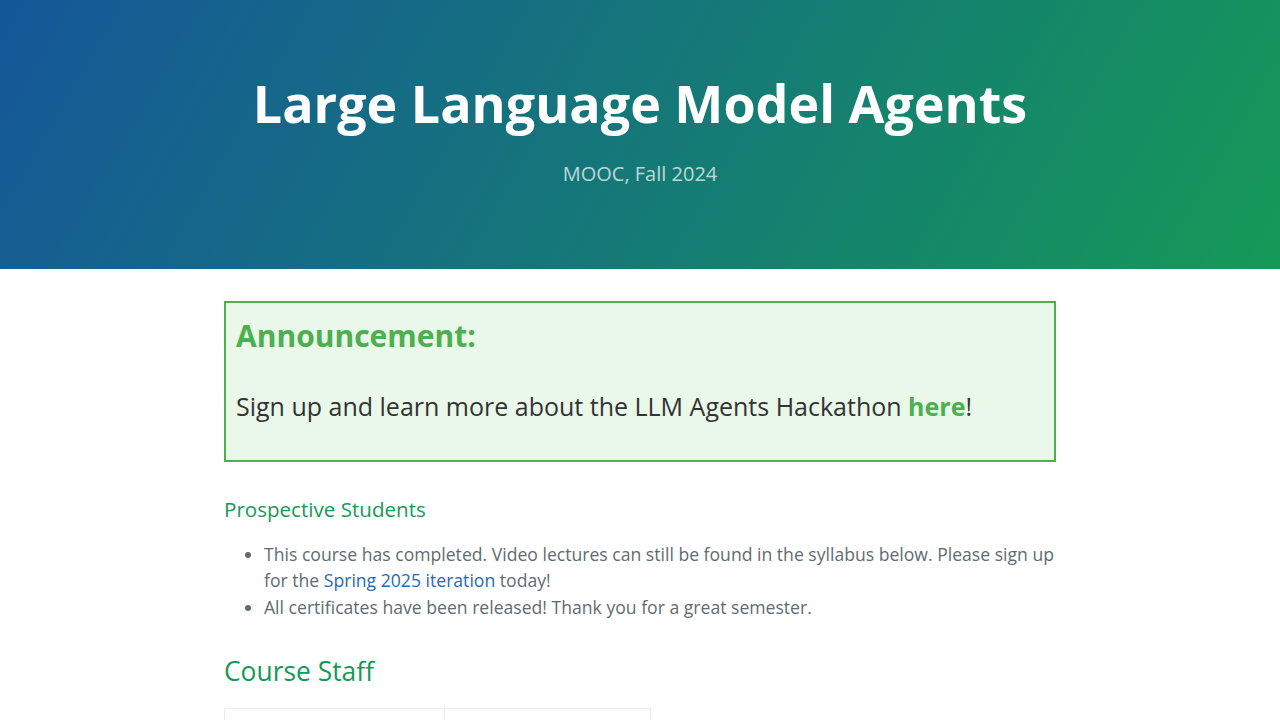
- What you learn: Agent fundamentals, planning, memory, tool-use research trends
- Best for: Those who want a solid theoretical foundation, aspiring researchers
- Pros: Real university lecture quality. A genuine curriculum for free
- Cons: Fairly difficult. ML fundamentals help
5. UC Berkeley Advanced LLM Agents MOOC
Provider: UC Berkeley
The advanced edition (Spring 2025: sp25). Dives deeper into higher-level topics like reasoning, planning, and code generation.
▶ View lectures on the official site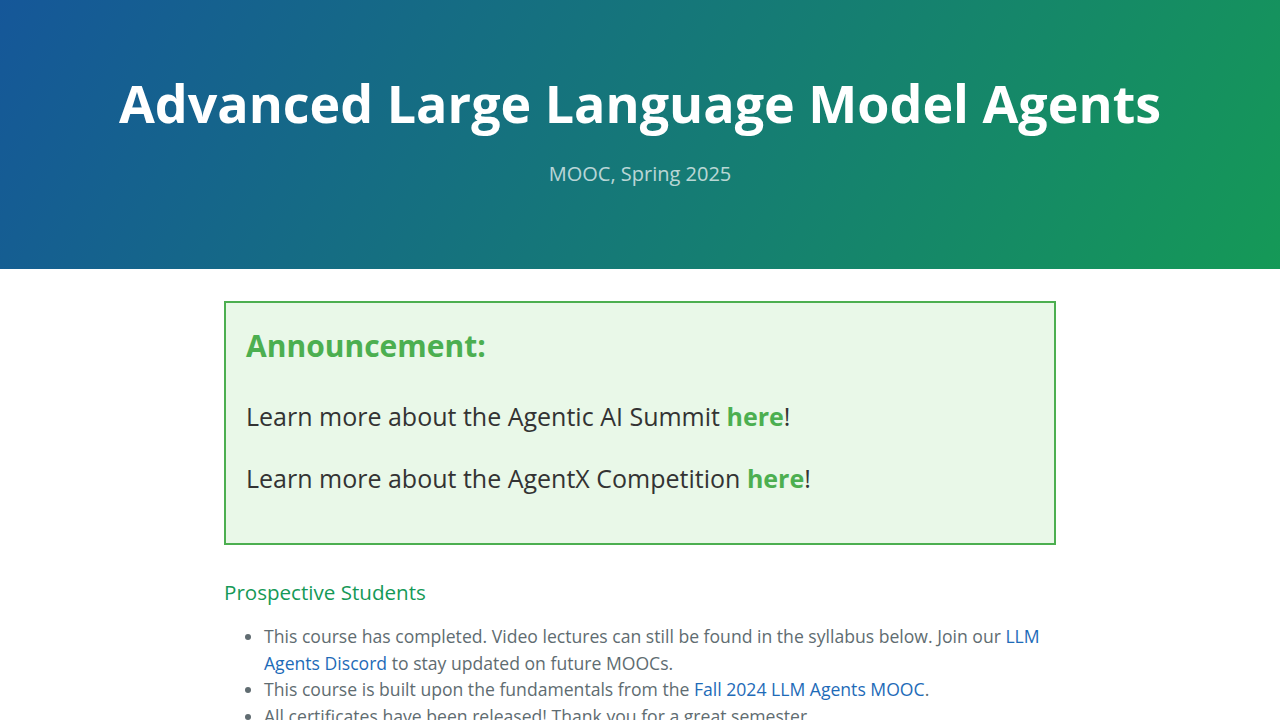
- What you learn: Advanced reasoning, code-generation agents, latest research
- Best for: Those aiming one level higher after finishing the basics
- Pros: Access to cutting-edge research topics
- Cons: Difficult. Completing course 4 is recommended first
6. Kaggle × Google 5-Day AI Agents Intensive
Provider: Kaggle × Google
A free intensive covering 5 themes in 5 days: models, tools, orchestration, memory, and evaluation. Code labs + explanations included.
▶ View the course on the official site
- What you learn: Model selection, tool implementation, orchestration, memory design, evaluation methods
- Best for: Intensive learners who "want to learn it all in one week"
- Pros: Short duration, covers evaluation too
- Cons: Fast pace. May include Google Cloud usage supplements
7. Intro to LangGraph (LangChain Academy)
Provider: LangChain
The official intro to LangGraph, the standard framework for building agents. Learn state, memory, and human-in-the-loop patterns.
▶ View the course on the official site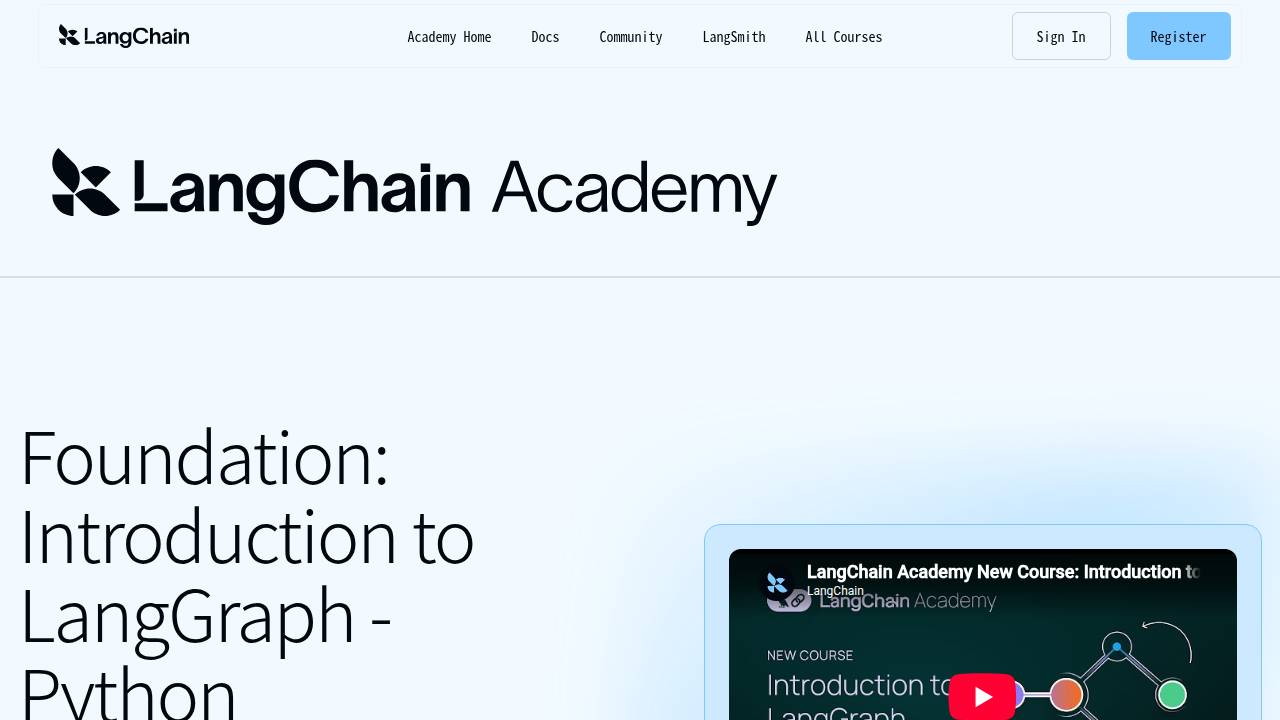
- What you learn: Graph-based agent design, state management, memory, human-in-the-loop flows
- Best for: Those who want to master one implementation framework
- Pros: Official and interactive. Builds real implementation skill
- Cons: Requires learning LangChain/LangGraph-specific concepts
8. Anthropic Academy
Provider: Anthropic (maker of Claude)
The official academy for learning Anthropic's technologies: Claude Code, API, MCP (Model Context Protocol), and agent skills.
▶ View the course on the official site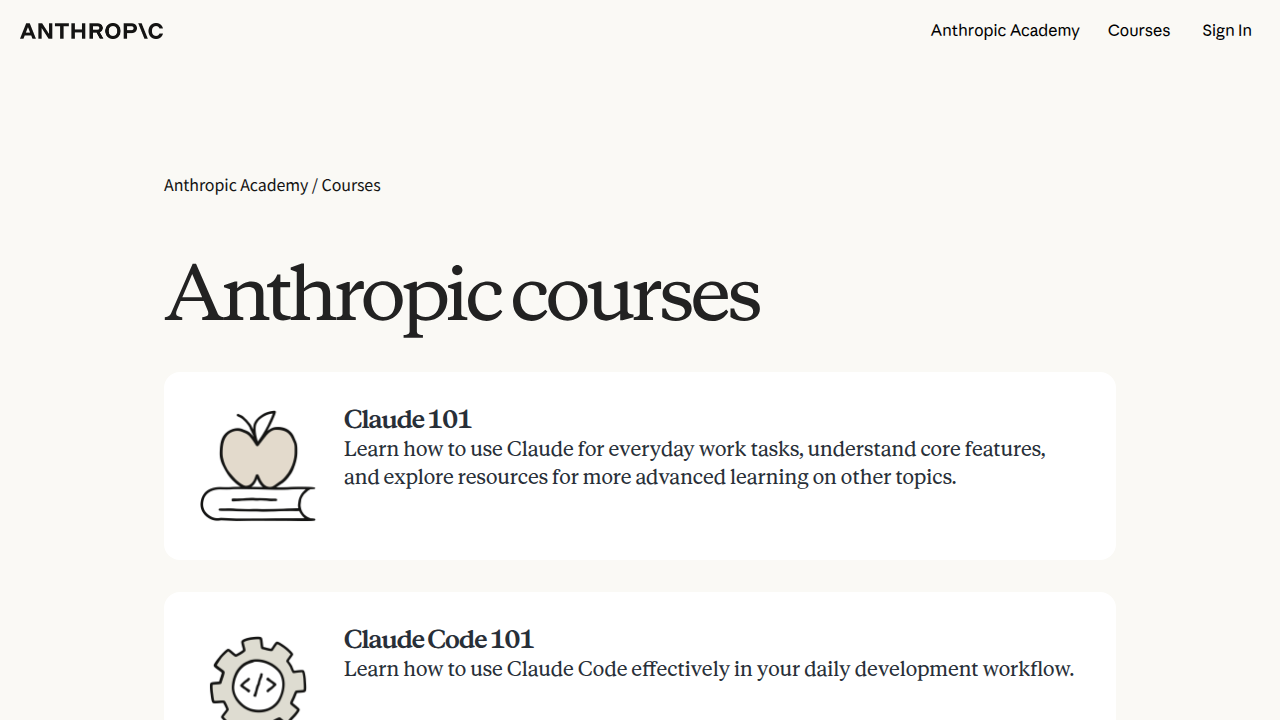
- What you learn: Claude API, Claude Code, MCP, agent-building best practices
- Best for: Those who want to fully leverage Claude-family tools
- Pros: Latest official Anthropic info. Directly practical
- Cons: Skewed toward the Anthropic ecosystem
9. Hugging Face MCP Course
Provider: Hugging Face
A free course covering MCP (Model Context Protocol) from basics to a certificate project. Build the standard protocol connecting external tools and AI end-to-end.
▶ View the course on the official site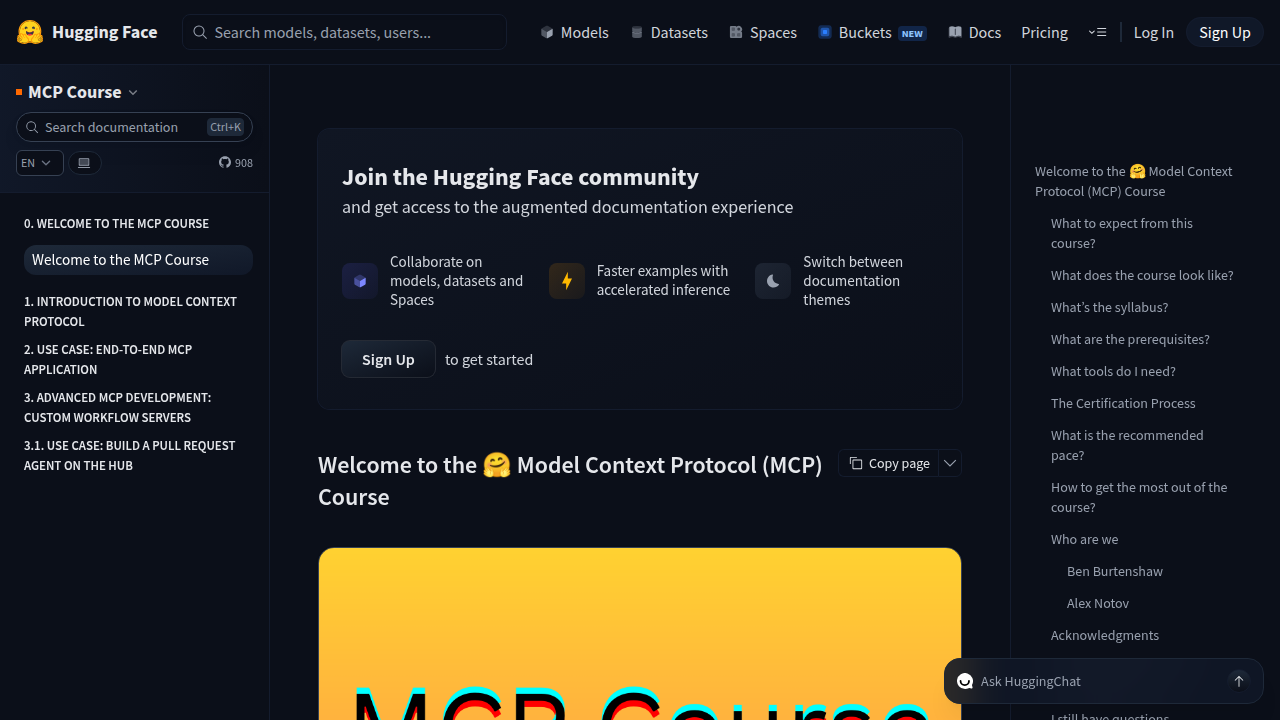
- What you learn: How MCP works, server/client implementation, certificate project
- Best for: Those who want to understand "AI + external tool integration" from the ground up
- Pros: Interactive + certificate. The most important topic of 2026
- Cons: English-centric
10. MCP for Beginners (Microsoft)
Provider: Microsoft
A beginner repo for learning MCP with language samples in Python, TypeScript, Java, .NET, Rust, and JavaScript. Rich language coverage is its hallmark.
▶ View the official GitHub repo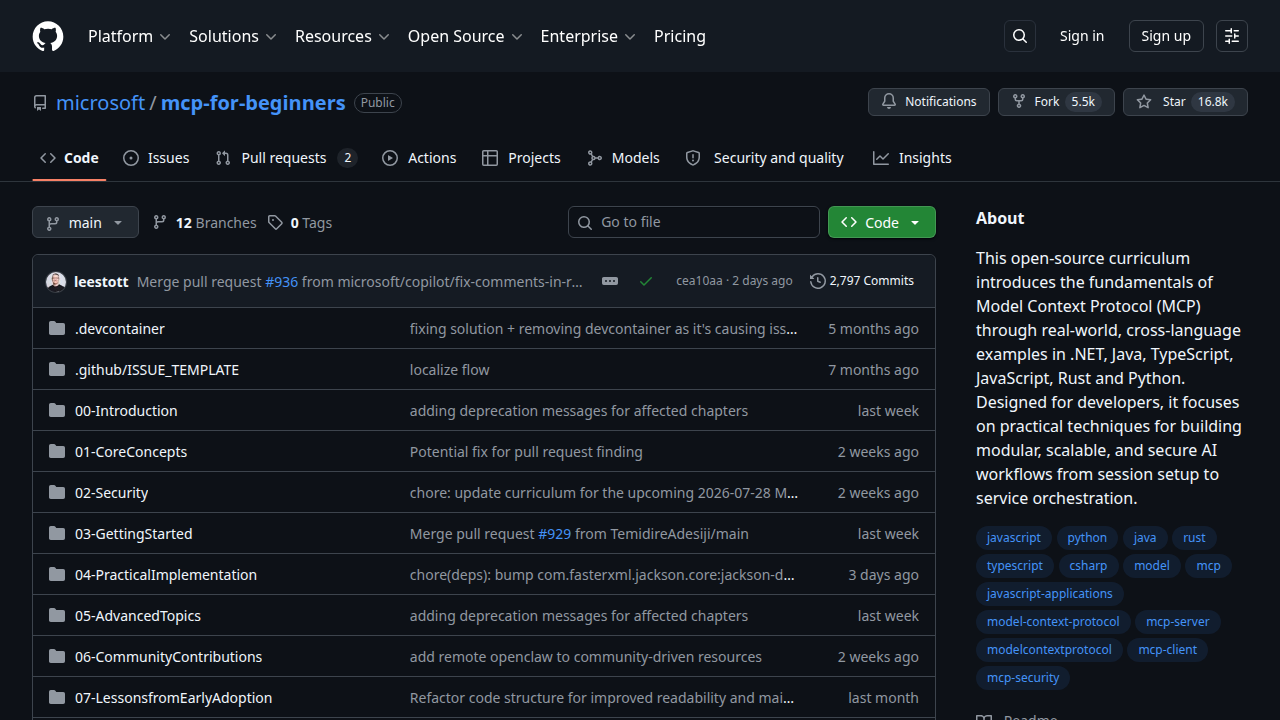
- What you learn: MCP basics, per-language implementation samples
- Best for: Those who want to understand MCP in their favorite language
- Pros: Multilingual. Plenty of code
- Cons: Implementation-sample-focused rather than theory
11. Anthropic Courses (GitHub)
Provider: Anthropic
An official repo for learning API basics, prompt engineering, and tool use via executable Jupyter Notebooks.
▶ View the official GitHub repo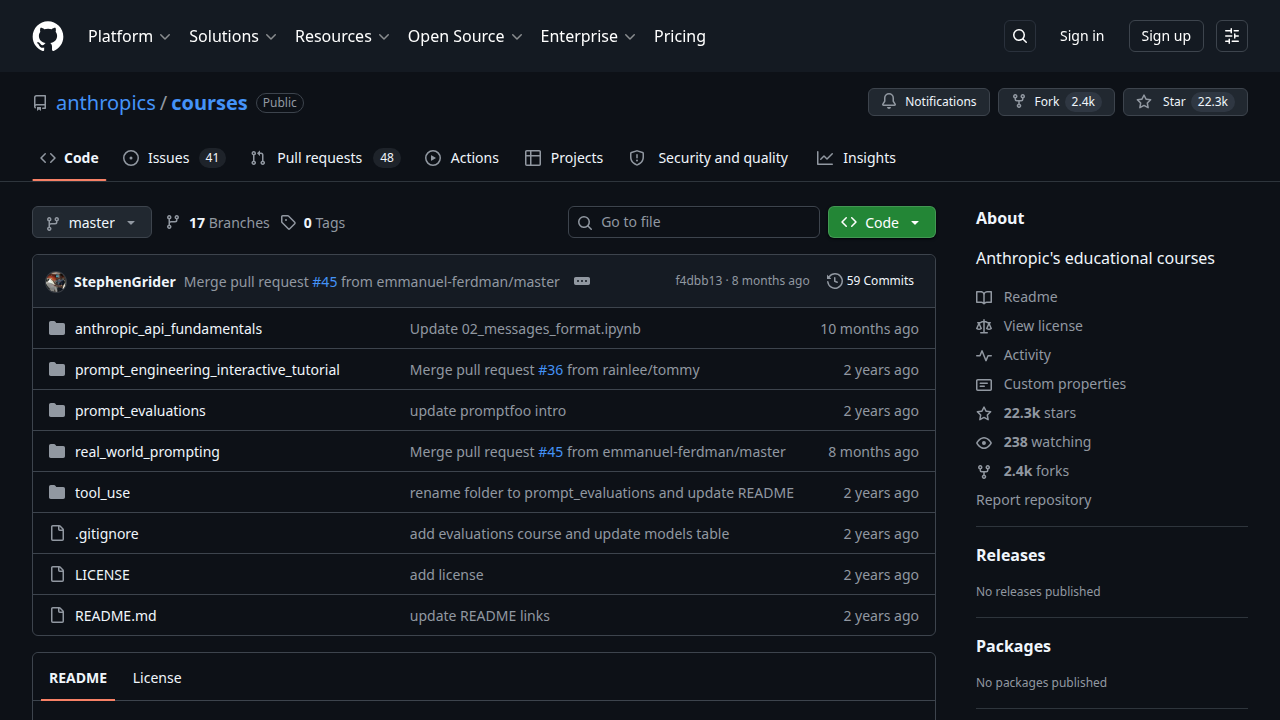
- What you learn: API basics, prompting techniques, tool-calling implementation
- Best for: Those who want to build fundamentals hands-on
- Pros: Runs immediately in Notebooks. Free
- Cons: More of a reference collection than a structured course
12. Kaggle × Google 5-Day Gen AI Intensive
Provider: Kaggle × Google
A 5-day intensive on generative AI overall: foundation models, embeddings, and agents, covered with whitepapers and code labs.
▶ View the course on the official site
- What you learn: Foundation models, embeddings, prompting, agents, paper reading
- Best for: Those who want a broad (but essential) overview of generative AI
- Pros: Learn from both papers and code
- Cons: Depth per topic is less than course 6 (Agents intensive)
Recommended Learning Order
You don't need to finish all 12. Here are recommended routes by goal.
Route A: Complete beginner (grasp the big picture first)
2 → 3 → 1 Touch code with Microsoft's intro, learn the mindset with Andrew Ng, then build a certificate project with Hugging Face.
Route B: Build implementation skills (framework-focused)
7 → 9 → 11 Master graph design with LangGraph, external integration with MCP, and API implementation with Anthropic Notebooks.
Route C: Deep theory and research
4 → 5 With Berkeley's two lectures, go from fundamentals to advanced reasoning and code generation at university level.
Route D: Short intensive covering everything
6 → 12 Use Kaggle's two 5-day intensives to survey agents and generative AI in 1–2 weeks.
Questions Readers Ask
Q1. Is everything really free?
Yes. All 12 courses listed are officially free (some include free certificates). However, some may incur cloud usage fees — check each course's description.
Q2. Is it okay if I'm not good at English?
Mostly English-centric, but Microsoft's "AI Agents for Beginners" and "MCP for Beginners" have community Japanese translations. Browser translation also works for most courses.
Q3. Do I need programming experience?
Beginner courses (2, 3, 10) are entry-level, but basic Python makes understanding much faster. If you're brand new, learn Python basics first, then start "Route A."
Q4. What's the most efficient order?
See the "Learning Order" section. When in doubt, start with 2 → 3 → 1 — the shortest path.
Q5. Do I get a certificate?
Hugging Face's "AI Agents Course" and "MCP Course" award certificates upon completing the projects. Others vary.
Q6. Isn't the content outdated in 2026?
AI evolves fast, so some implementation details change. But the core ideas — the 4 design patterns, MCP, graph design — will remain useful for a long time.
Summary
You don't need to pay a fortune to master AI agents. 12 free courses from the world's top universities and companies cover everything from basics to implementation to the latest research.
- Start with Microsoft's "AI Agents for Beginners" to touch code
- Grasp the big picture in one hour with Andrew Ng's "Agentic AI"
- Build implementation skills with LangGraph and MCP as your two pillars
Use the screenshots and explanations in this article to pick your route. Stay consistent, and in a few months you'll reach "comfortably using AI agents" level.
This article is for informational purposes. Course content is based on official site announcements. Check each official site for the latest curriculum and availability.Recommended Reading
- Hermes Agent Memory Complete Comparison: Built-in vs Honcho vs Mem0 vs Hindsight vs ByteRover (All 9)
- Loop Library Complete Guide: 70 Copy-Paste AI Agent Loops
- scroll-world Complete Guide: The Revolutionary Agent Skill That Auto-Generates Scrolling 3D Worlds
- Blender MCP with Hermes Agent Complete Guide
- How to Build AI Agents: "Loops" vs "Graphs" Explained
Related reading
Share this article
Related articles
Aug 24, 2026
OpenConnector Guide 2026: The Open-Source Auth Gateway Connecting 1,000+ SaaS Providers to AI Agents

Aug 15, 2026
What Can You Do with the Digital Agency’s MCP for Administrative Procedures? A Beginner-Friendly Guide to Analyzing 75,000 Government Records with AI (2026)
Sep 9, 2026
Tencent TeamAI CLI: Share Skills & Knowledge Across Your Team's AI Agents (2026)
Sep 5, 2026
Google ARTEMIS: Control Real Android Phones with Natural Language (2026 Guide)

Sep 1, 2026
The End of Software Engineering, Explained: How AI Agents Are Restructuring Software Development (arXiv 2026)

Aug 25, 2026
OpenAI "Reset Lord" Tibo Interview Explained 2026: Codex Lead on Astra, AI Culture & the Future of Agents