Summary
DeepSeek Harness (dsh) is an AI coding-agent "harness" that DeepSeek released on August 13, 2026 under the MIT license (open source). Its biggest feature is "Everything is a plugin" — models, tools, sandboxes, sessions, and even the UI can all be swapped and recomposed freely. Unlike Claude Code (closed) or Codex (closed product), it is fully open source and works with models other than DeepSeek (Claude, GPT, local, etc.).
DeepSeek Harness Explained 2026: What It Can Do, How It Differs from Codex & Claude Code, and the Best Way to Use It
"DeepSeek V4 launched together with 'DeepSeek Harness' — but what is it? How is it different from Codex and Claude Code? Which should I use?"
Bottom line first:
DeepSeek Harness (dsh) is an AI coding-agent "harness" that DeepSeek released on August 13, 2026 under the MIT license (open source). Its biggest feature is "Everything is a plugin" — models, tools, sandboxes, sessions, and even the UI can all be swapped and recomposed freely. Unlike Claude Code (closed) or Codex (closed product), it is fully open source and works with models other than DeepSeek (Claude, GPT, local, etc.).
This article is a beginner-friendly re-organization based mainly on the official page “DeepSeek Harness developer preview” and the GitHub repository deepseek-ai/deepseek-harness, with reference to several reviews and comparisons.
This article does not contain affiliate links.What is DeepSeek Harness: “Everything is a plugin”
DeepSeek Harness (project name dsh) is an agent harness released by DeepSeek — the "harness" concept explained in our previous article: the software environment that lets an AI model work as an agent.
What sets it apart: everything is a plugin.
| Component | Role |
|---|---|
| Model | Connect any API: DeepSeek, Claude, GPT, local... |
| Tools | File editing, shell, search, web... |
| Sandbox | Execution safety configured via plugins |
| Session | Records everything it sees; search & replay |
| Agentic loop | The working loop (swappable) |
| UI / CLI / SDK | Web UI, command line, Python SDK |
The central Cordis kernel only manages plugin mounting, dependency resolution, and event dispatch (no business logic). All features are plugins, recomposable in config (YAML) without touching source code.
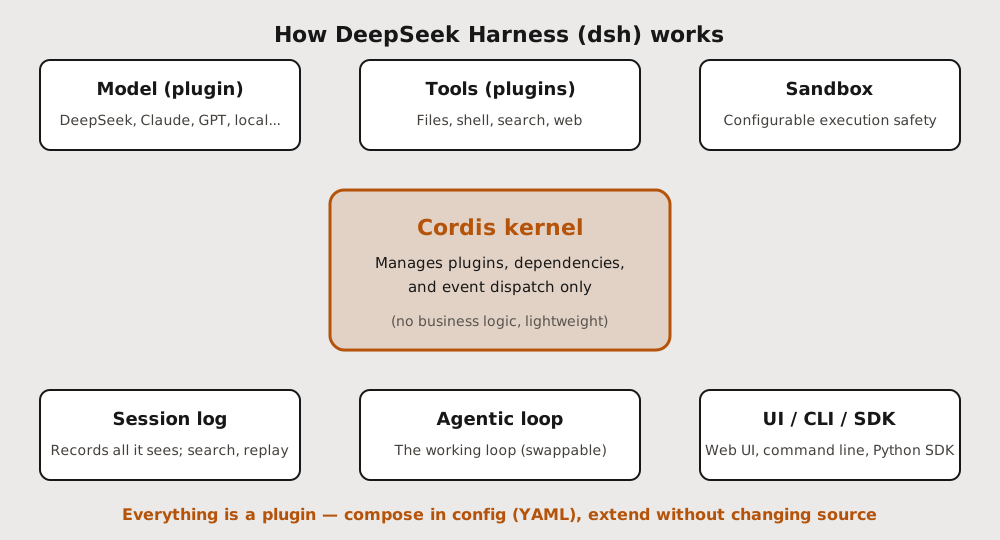 DeepSeek Harness is not a "packed product" but a "framework" you can reassemble.
What can DeepSeek Harness do?
Like other coding agents, it has the core capabilities, plus its own strengths.
Core capabilities
- Repository inspection, file editing, shell/command execution, web/file search
- Planning, delegating to subagents
- Skills (packaged workflows), goals, multi-step workflows
Unique strengths
- Model-agnostic: officially 40+ model providers (OpenAI, Anthropic, Google, Kimi, etc.) plus any OpenAI-compatible endpoint (self-hosted, local GGUF)
- Fully traceable: everything the model sees is recorded in an append-only session log. Inspect by source in the Trajectory view; Resume, Fork, search, and Replay all work on the same event stream
- Fully open source (MIT): read, fork, embed, and modify the source. Local-first: models, credentials, and sessions stay on your machine
- Multiple runtime modes:
- Standard mode: full coding agent
- Code mode: model-generated code (Code Mode SDK) orchestrates multi-step tool calls
- Minimal mode: minimal (bash + file editor) for quick model benchmarking
- Creator mode: build your own custom agent presets
How it differs from Codex & Claude Code: 3-way comparison
Here's a comparison on the key axes (based on public info as of the v0.1 preview):
| Axis | DeepSeek Harness | Claude Code | Codex |
|---|---|---|---|
| Open source | Fully (MIT) | Closed | CLI open, cloud managed |
| Model lock-in | None (any model) | Claude-focused | OpenAI-focused |
| Extensibility | Everything is a plugin | Hooks/MCP/plugins | Limited |
| Sandbox | Plugin-defined | App-layer hooks | Kernel-level (strong) |
| Cost | Model API only (cheap with V4-Flash) | Subscription or API | Subscription or API |
| Maturity | Developer preview | Stable product | Stable product |
Key takeaways:
- Open source & auditability: Only DeepSeek Harness opens its full source, lets you audit what the model sees and what tools touch, and runs fully offline locally
- Model freedom: DSH is model-agnostic (DeepSeek default, but Claude, GPT, local, or multiple providers can be routed in one session). Claude Code is Claude-centric; Codex is OpenAI-centric
- Extension philosophy: vertical integration (Claude Code/Codex) vs horizontal composition (DSH). DSH sells "you can build the engine yourself"
- Sandbox strength: Codex's kernel-level sandbox is strongest for isolating untrusted external code; DSH lets you build your own policy via plugins
- Cost: DSH itself is free. With DeepSeek V4-Flash, large-scale automation can be cheaper than incumbent subscriptions
- Maturity: DSH is a developer preview — breaking changes are possible right now. Claude Code and Codex are stable products
How to use it best: recommendations by use case
"Which to pick" depends on your goal. Here's my honest take:
| Goal / situation | Pick | Why |
|---|---|---|
| Cost-sensitive, large-scale AI automation | DSH + DeepSeek V4-Flash | Free harness; pay only model API, cheap |
| Full customization, own policy, audit/compliance | DSH (open source) | Source audit, plugin sandbox, local run |
| Switch between multiple models (Claude/GPT/local) | DSH | Model-agnostic routing |
| Stable, ready-made product in a big ecosystem | Claude Code / Codex | Mature, supported, out-of-the-box |
| Strong isolation for untrusted external code | Codex | Kernel-level sandbox is strongest |
| Complex multi-stage approval workflows | Claude Code | Fine-grained permission modes, enterprise controls |
Notes
- DeepSeek Harness is a v0.1 developer preview. The official docs say there will be breaking changes. For mission-critical production, Claude Code/Codex are safer today
- DSH assumes "you build it yourself," so setup is harder than Claude Code/Codex. Best for engineers who can follow the source and enjoy experimenting
- Many developers realistically run both: DSH for experiments (cost/freedom) and Claude Code/Codex for production
Summary: DeepSeek Harness is the open-source harness for those who choose "maximum freedom"
DeepSeek Harness is a fully open-source (MIT) AI coding harness built on "everything is a plugin" — models, tools, sandboxes, sessions, and UI can all be recomposed freely. It is model-agnostic, and with DeepSeek V4-Flash it keeps costs low. However, it's a developer preview (v0.1) — for stable production use, Claude Code/Codex; for freedom and auditability, DSH. That split is the optimal way to use them.
If you value cost, open source, and free customization, DeepSeek Harness is a choice worth watching in late 2026.
Sources
- DeepSeek official「DeepSeek Harness developer preview: Everything is a plugin」(published Aug 2026)
- GitHub「deepseek-ai/deepseek-harness」(MIT license, v0.1 preview)
- Comparison/review info based on public articles as of the v0.1 preview; figures refer to the primary sources above
※ This article is a beginner-friendly re-organization/paraphrase of the primary sources; some parts are the author's supplementary explanations (based on public information, not speculation).
Related reading
Share this article
Related articles

Aug 15, 2026
Use DeepSeek Harness with OpenRouter in 2026: How "Ori" Switches 500+ Models with One Command, Explained for Beginners
Aug 7, 2026
DeepSeek + Codex Complete Guide 2026: One-Click Setup to Use DeepSeek in Codex CLI, ChatGPT Desktop, and VS Code
Aug 9, 2026
Learn Claude Code Complete Guide 2026: The Free Learning Site That Builds Your Own AI Agent from Scratch in 20 Sessions
Aug 12, 2026
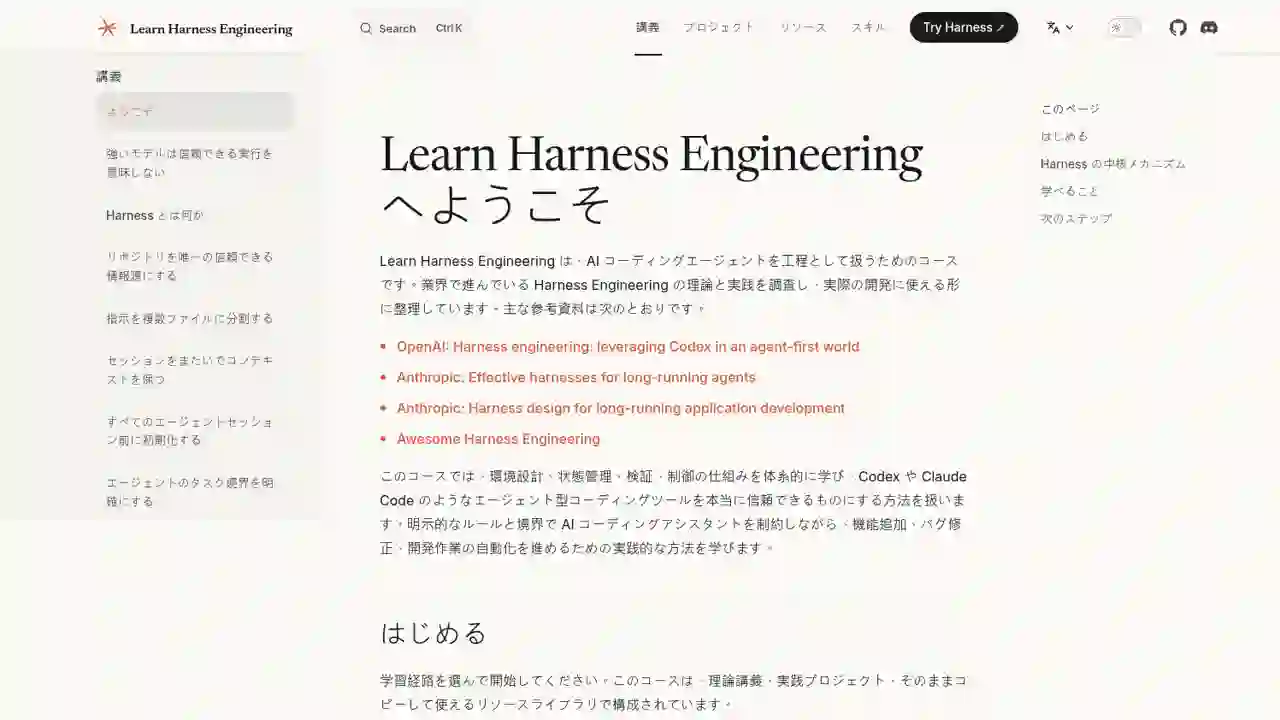
Learn Harness Engineering Complete Guide 2026: The Free Course That Makes AI Agents Reliable with a "Harness"
Aug 10, 2026
Complete Guide: DeepSeek V4 Flash × 8 Agent Harnesses in 2026 — Composio Eval Shows Pi Agent Is Cheapest & Passes the Most Tasks
Jul 16, 2026
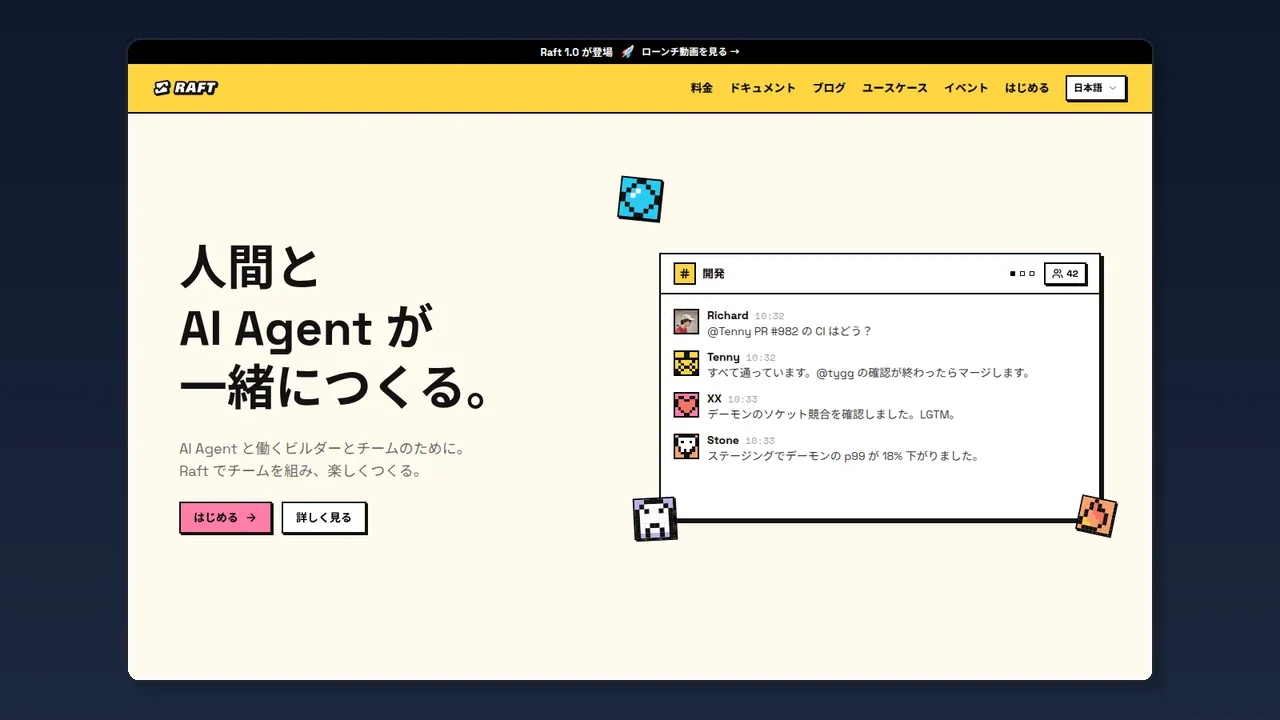
What Is Raft (raft.build)? The New Platform Where Humans and AI Agents Work as a "Team," Explained (2026 Guide)