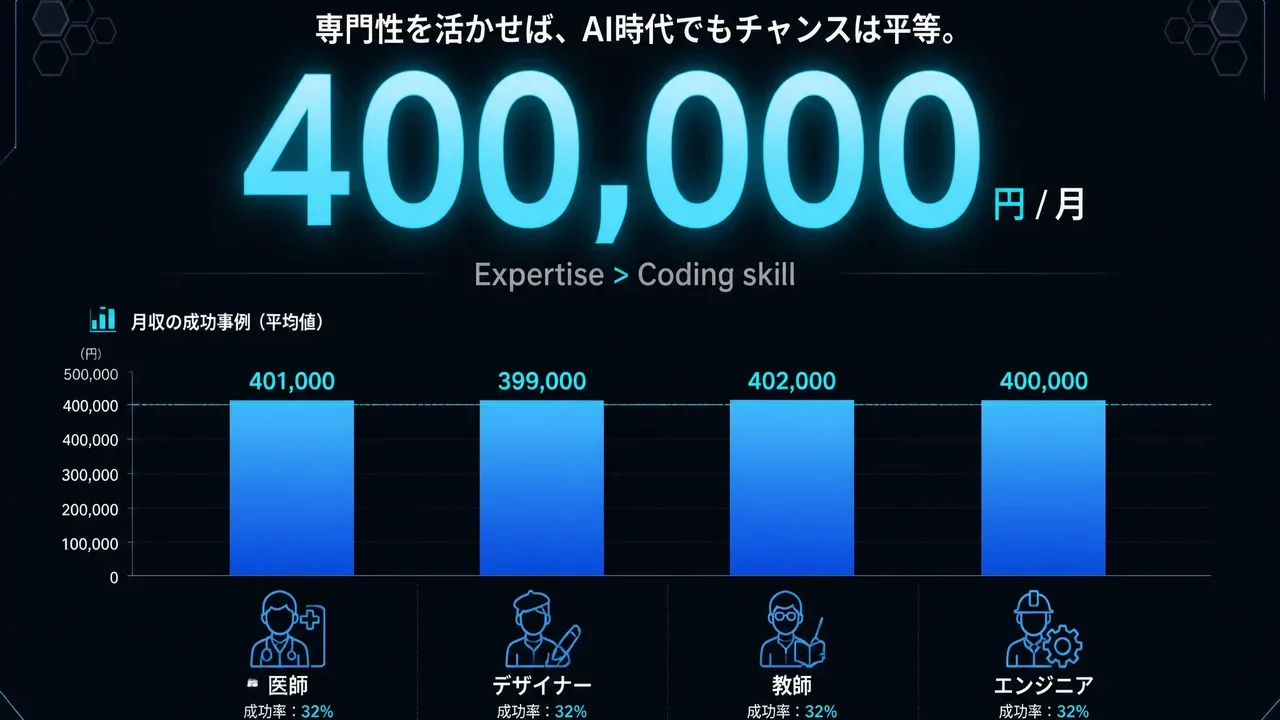
Summary
Humans decide "what to do," AI executes "how to do it."
2026: Anthropic Analyzes 400K Claude Code Sessions: "What Matters Most Isn't Coding Skill"
"Wondering whether you need to be a strong programmer to get real value out of AI coding agents?"
In July 2026, Anthropic analyzed roughly 400,000 Claude Code sessions — and the results revealed a surprising fact.
What separates success from failure with AI coding agents isn't "programming skill" — it's domain knowledge.
Designers, data analysts, product managers — people who aren't coding specialists — were using Claude Code with nearly the same success rate as software engineers.
This article breaks down the core findings of Anthropic's June 2026 research paper, "Agentic Coding and Persistent Returns to Expertise," with diagrams and clear explanations.
Overview of the Research
Anthropic analyzed roughly 235,000 users and 400,000 sessions over approximately 7 months (October 2025 – April 2026), in a privacy-conscious manner.
Three key findings:
- Domain expertise is what determines AI coding success
- Debugging time halved over 7 months — users shifted to higher-level tasks
- Per-task value rose 25% on average
Finding 1: The Human-AI Division of Labor
The research team discovered a clear division of labor between humans and AI in Claude Code sessions.
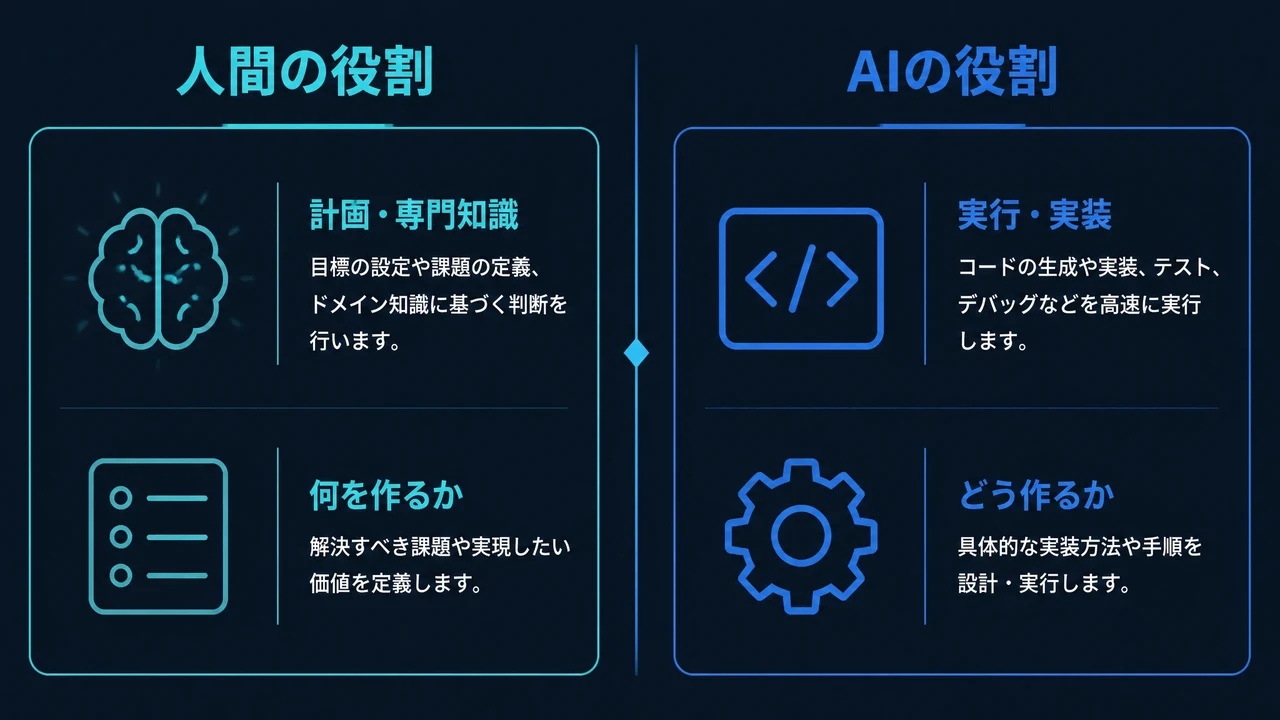
The Human (User) Role
- What to build (planning, design, requirements definition)
- Domain knowledge (specialized judgment)
- Direction-setting
The AI (Claude Code) Role
- How to build (implementation, coding)
- Code creation and modification
- Technical implementation details
In short: Humans decide "what to do," AI executes "how to do it."
This division of labor becomes more pronounced the richer the user's domain knowledge. In other words, the better you can articulate "what you want to do," the more output you can extract from AI.
Finding 2: Nearly the Same Success Rate Across All Professions
This is the most surprising finding.
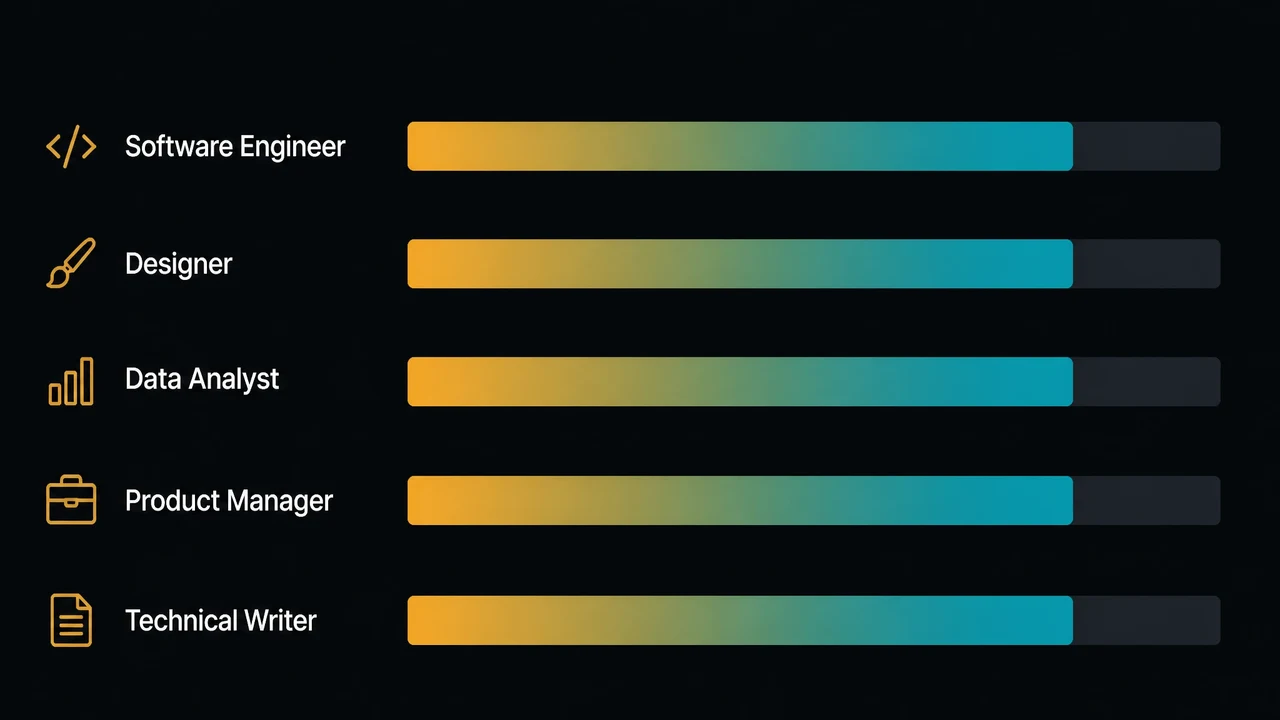
Software Engineers: ~81% Designers: ~79% Data Analysts: ~78% Product Managers: ~77% Technical Writers: ~76%
Remarkably, all professions had nearly the same success rate — evidence that even non-specialist programmers can use AI coding tools effectively.
Definition of Success
Anthropic defines "success" as "the user achieved what they set out to do, with verifiable evidence such as passing tests or code commits." In other words, this is a strict criterion — not just "it kind of worked."
Finding 3: Debugging Time Halved, Task Value Rose
Over the 7-month study period, user behavior changed significantly.
Debugging Time Halved
Compared with the start of the study, the proportion of time spent debugging within sessions dropped by roughly half. What increased instead:
- Code deployment and execution
- Data analysis
- Non-code document creation
As AI became more reliable, users shifted from "fixing" to "leveraging."
Per-Task Value Rose 25%
At the same time, per-session task value rose by an average of 25%. This is an estimate based on comparison with freelance job postings, indicating that users began tackling more complex and higher-value tasks.
What This Research Means for the Future
1. The Era of "You Don't Need to Code"
This data backs up the prediction that "programming is no longer a special skill — it becomes a tool everyone has." GitHub's record-breaking growth in new signups aligns with this trend.
2. The Value of Domain Knowledge Increases
Anthropic's research team states it clearly:
"Coding agents do not replace domain expertise. The more understanding a worker brings to the agent, the higher quality work the agent produces."
In other words, the value of "people who understand what has value" continues to increase.
3. The Learning Curve Is Not Steep
The success rate gap between experts and intermediate users was only about 7%. In other words, with a reasonable level of domain knowledge, you can use AI tools effectively without special training.
Summary
The conclusion of this research is simple:
AI coding success is determined by "professionalism (domain knowledge)" more than "coding ability."
| Myth | Truth |
|---|---|
| Only programmers can master AI code tools | All professions have nearly the same success rate |
| People who can write code have the advantage | People who understand the problem have the advantage |
| AI will take your job | AI handles implementation; human judgment becomes more valuable |
| Learning takes a long time | The gap between experts and intermediates is minimal |
AI coding tools are evolving from "tools for programmers only" to "tools for all knowledge workers." This is not a threat — it's an opportunity.
Reference Links
- Anthropic Official Research Paper: "How Claude Code Is Used in Practice"
- Research Paper PDF
- Anthropic Official Blog
- Claude Code
This article contains no affiliate links. It is an explanatory article based on Anthropic's publicly available research data.
Related Reading
- Claude Fable 5 Financial Guide: How AI Agents Protect, Monitor, and Optimize Your Assets [2026]
- Cloudflare Monetization Gateway Complete Guide [2026]: How to Add One-Click Billing to Web Pages, APIs, and MCP Tools
- A Fable of Codexes Complete Guide [2026]: How to Build an AI Worker Army Commanded by Claude
- GPT-Live Complete Guide [2026]: How OpenAI's Full-Duplex Voice AI Fundamentally Changes ChatGPT
- How to Dramatically Improve AI UI Generation with component.gallery [2026]: A Visual Dictionary of Components
Related reading
Share this article
Related articles
Jul 6, 2026
Claude Code Loops Guide 2026: Anthropic's 4 Loop Types Explained (Turn / Goal / Time / Proactive)
Aug 8, 2026
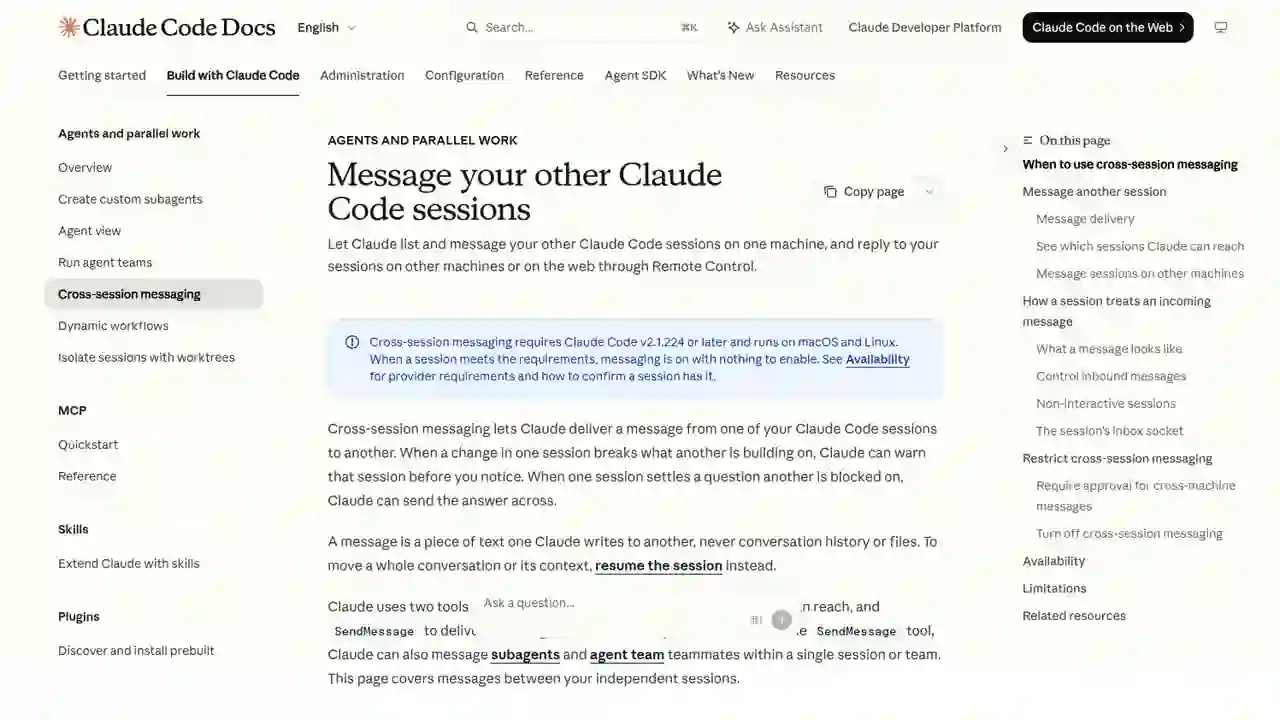
Claude Code Cross-Session Messaging Complete Guide 2026: Sessions Can Now Send Messages to Each Other
Jun 22, 2026
AI Coding Agent Complete Comparison 2026: Cursor vs Claude Code vs Codex vs Hermes vs Fugu

Jun 22, 2026
Hermes Agent vs Cursor — Full Comparison 2026: Which Should You Choose? Complete Guide to Using Both
Sep 4, 2026
What Is the show-me Skill? Visualize Any Topic with Diagrams, Code Sketches & HTML (Claude Code Skill Guide 2026)
Sep 4, 2026
TypeScript Legend Matt Pocock Calls "/show-me Phenomenal" — the Claude Code Skill That Makes Code Reviews & PR Descriptions Easy to Read (2026)