Summary
OpenCat ESP32 is an open-source quadruped robot firmware/framework that runs on the ESP32 dual-core "BiBoard" controller.
OpenCat ESP32 Complete Guide: Build & Program GitHub's Top Open-Source Quadruped Robot (2026)
"I want to build and program my own quadruped robot."
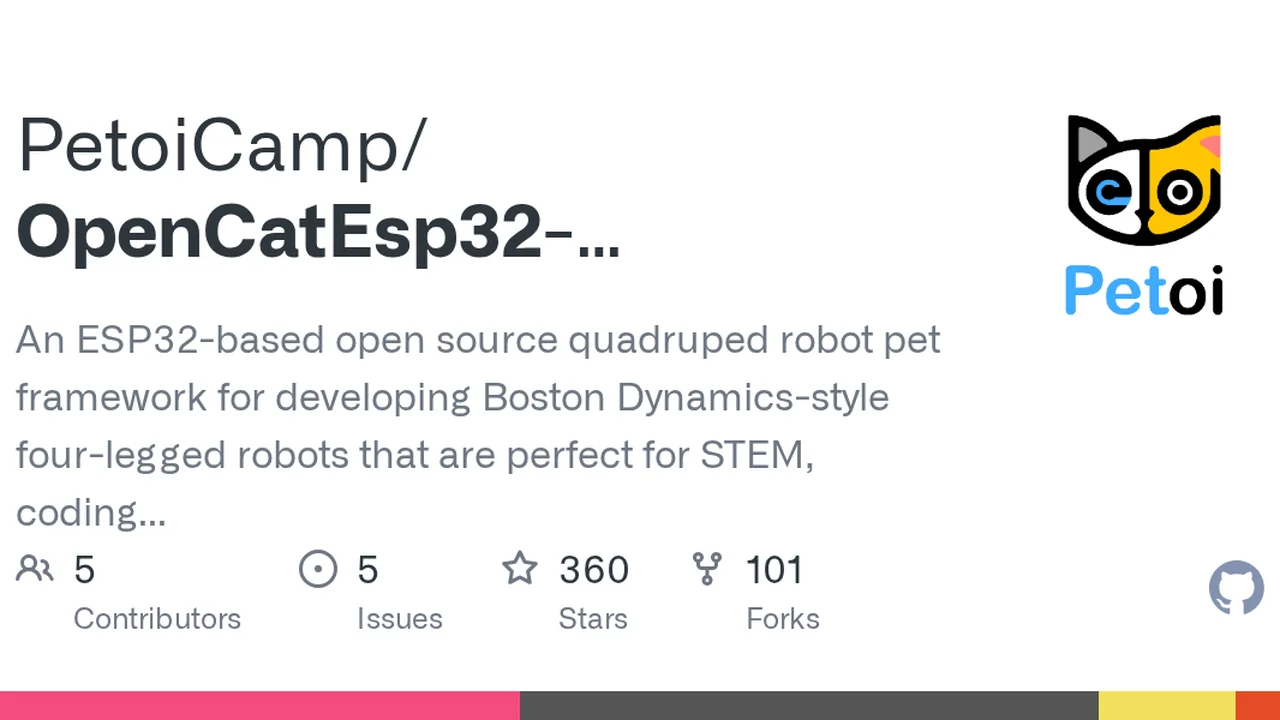
That's exactly what the open-source framework OpenCat ESP32 delivers. With 360 stars on GitHub, this project runs on the ESP32-based "BiBoard" control board and powers the robot dog Bittle X and robot cat Nybble Q under the fully open-source MIT license.
A Boston Dynamics-style quadruped robot you can build from a kit starting at roughly $319 (with the new Quaddle desktop model from $99). You can progress from block-based coding to Python, C++, and even ROS — a platform actually used in K-12 classrooms up to university research labs.
This guide covers how OpenCat ESP32 works, choosing the right hardware, setting up the dev environment, and concrete examples of what you can build.
- GitHub repository: github.com/PetoiCamp/OpenCatEsp32-Quadruped-Robot
- Official docs: docs.petoi.com
- Petoi store: petoi.com
What Is OpenCat ESP32?
Bottom line: OpenCat ESP32 is an open-source quadruped robot firmware/framework that runs on the ESP32 dual-core "BiBoard" controller.
Buy the robot body (Bittle X / Nybble Q) and you get an assemble-it-yourself kit; rewrite the code and you can add your own behaviors and AI features. It's designed not just as a fun pet but as a learning platform for quadruped locomotion, IoT, AI vision, and reinforcement learning.
OpenCat is a long-running project started in 2018 — over 30,000 robots shipped to 60+ countries, cited in 20+ academic papers. A platform with real track record in both education and research.

(Video: official Petoi demo on YouTube)
Supported Hardware
OpenCat ESP32 runs on the current-generation robots powered by the ESP32-based BiBoard.
| Model | Type | DOF | Price |
|---|---|---|---|
| Bittle X (dog) | Voice-controlled robot dog | 9 | $319 |
| Nybble Q (cat) | Assemble-it-yourself robot cat | 11 | $435 |
| Quaddle (desktop) | 4-servo omnidirectional quadruped (Kickstarter Sept 2026) | 4 | from $99 |
Prices from the Petoi store as of September 2026 — check the official site for current pricing.
The older Bittle/Nybble (NyBoard, ATmega328P) are discontinued; current models all run BiBoard. For an older Bittle, use the legacy OpenCat repo (github.com/PetoiCamp/OpenCat).
Why ESP32 (BiBoard)?
The old NyBoard was adequate for walking but underpowered for real robotics development. BiBoard fixes all of that.
| Item | BiBoard (ESP32) | NyBoard (ATmega328P, old) |
|---|---|---|
| CPU | ESP32 dual-core 240MHz | 8MHz-class single core |
| Wireless | Wi-Fi + Bluetooth built in | Separate dongles |
| Servo channels | Up to 12 (12-DOF) | Up to 11 |
| Dev environment | Arduino IDE (same workflow) | Arduino IDE |
| Headroom | AI, ROS, vision — plenty of headroom | Locomotion only |
In short: the evolution from "make it walk" to "make it a research platform." A 240MHz dual-core handles real-time servo coordination and camera-based AI processing simultaneously. Built-in Wi-Fi and Bluetooth mean wireless control and data streaming with no dongles.
Both hardware and software are fully open source under the MIT license — fork it to build your own robot, or use it freely in research.
BiBoard V1 Key Specs
| Item | Spec |
|---|---|
| Processor | ESP32 MINI 1 (Xtensa dual-core 32-bit LX6 / 240MHz) |
| Flash | 4MB |
| Wireless | 2.4GHz Wi-Fi + Bluetooth Low Energy |
| Servo headers | 12-channel PWM |
| Motion sensor | Flight-controller-grade 6-axis IMU |
| Expansion | Grove socket, standalone voice recognition (EN/CN), speaker |
Assembly & First Setup
Assembling Bittle X takes about 60 minutes per the official guide — no soldering, designed for ages 10+. The flow:
- Assemble the kit — frame, servos, legs per the manual, then mount the BiBoard
- Connect via mobile app — over the BiBoard's built-in Bluetooth
- Joint calibration — set the neutral positions on all axes with the app's Calibrator
- Drive it — run 35+ lifelike movements from the app's Controller
No code needed up through calibration. First enjoy it as a finished robot pet, then start hacking.

(Video: official "Bittle Gap Jump" demo on YouTube)
Modifying the Firmware (Arduino IDE)
Here's where OpenCat ESP32 shines. Rewrite the GitHub firmware from the Arduino IDE and add your own behaviors.
Setting Up the Environment
- Add ESP32 board support to Arduino IDE — add the ESP32 board URL in Preferences, then install "esp32" from Boards Manager
- Use version 2.0.12 — versions 2.0.13+ are reported to prevent startup (per official docs)
- Download the OpenCatEsp32 repo — if you grab the Zip, rename the folder from
OpenCatEsp32-maintoOpenCatEsp32(must match the .ino name) - Install libraries — ArduinoJson, WebSockets, MU Vision Sensor
Board Settings (ESP32 Dev Module)
| Setting | Value |
|---|---|
| Upload Speed | 921600 |
| CPU Frequency | 240MHz (WiFi/BT) |
| Flash Frequency | 80MHz |
| Flash Mode | QIO |
| Flash Size | 4MB |
| Partition Scheme | Default 4MB with spiffs |
| PSRAM | Disabled |
Set the Device Macro and Upload
Edit the macros at the top of OpenCatEsp32.ino:
#define BITTLE    // 9-DOF robot dog: 1 head + 8 legs
// #define NYBBLE  // 11-DOF robot cat: 2 head + 1 tail + 8 legs
If you attached the robotic arm, also enable #define ROBOT_ARM. Then connect via USB Type-C and hit Upload.
Open the serial monitor (115200 baud, No line ending) to watch the boot log for I2C device detection and firmware version.
Sensor Expansion
The BiBoard has Grove sockets for official extension modules:
- Petoi AI Vision — object recognition and person detection via MU vision sensor
- Ultrasonic distance sensor — obstacle avoidance
- Raspberry Pi / NVIDIA Jetson integration — offload heavy AI over serial UART
Official tutorials cover NVIDIA Isaac simulation, reinforcement learning, and SLAM with ROS — the platform scales from "toy" to "research bench."
The Programming Learning Path
You don't start by writing C++. OpenCat ESP32 is built for gradual progression — one reason it's used in education:
- Block coding — drag-and-drop on iPad/Android tablets
- Python — the step after Petoi Coding Blocks; adding voice commands is a popular example
- C++ (Arduino IDE) — modify the firmware itself: new gaits, sensor integration
- ROS / ROS2 — research level: SLAM, navigation, reinforcement learning
Free official curricula are used in K-12 schools, colleges, and robotics camps — with roughly 15 hours of lessons published at no cost.
Who It's For (and Who It Isn't)
✅ Pros
- + Fully open source (MIT) — free to modify and use in research
- + ESP32 dual-core 240MHz comfortably runs AI and ROS
- + Built-in Wi-Fi and Bluetooth — wireless control with no extra parts
- + Proven platform: 360 stars, cited in 20+ academic papers
- + Graduated learning path: blocks → Python → C++ → ROS
- + Active community on Reddit and Discord
❌ Cons
- - Assembly takes ~60 minutes and requires patience with small parts
- - Serious AI work assumes an external board like Raspberry Pi
- - New Quaddle model ships after the September 2026 Kickstarter
- - Not cheap for an educational robot ($319+)
Great fit for:
- Students and researchers serious about legged robotics
- Parents and educators teaching both coding and hands-on building
- Hobbyists who want a Boston Dynamics-style quadruped on a budget
- Anyone needing a small ROS / RL test platform
If you just want a finished robot with no assembly, other products fit better. OpenCat ESP32 is a platform for people who enjoy building and hacking.
Watch the New "Quaddle"
Launched on Kickstarter September 2, 2026, Quaddle is a breakthrough low-DOF design: an omnidirectional quadruped on just 4 servos. Retro-mechanical legs drive a full knee lift from a single motor, slashing cost.
- Builder ($99 super early bird): 90+ movements, Raspberry Pi Zero socket
- Buddy ($139): open-domain AI chat, Learn & Replay by hand
- Scout ($179): built-in gesture, light, and infrared sensors for research
At $149–$269 MSRP it's far cheaper than Bittle X ($319). A very attractive entry line — general availability after the Kickstarter is worth watching.
Conclusion: Bittle X Now, or Wait for Quaddle?
Two clear options:
- Want serious quadruped robotics now → Bittle X ($319)
- On a budget / equipping a classroom → wait for Quaddle (from $99)
The real value of OpenCat ESP32 is that it's both a consumer robot toy and an open-source learning platform. 360 stars may look modest, but in the quadruped niche it's GitHub's most-starred platform, backed by academic citations.
Start by browsing the GitHub repository to gauge the codebase and community activity.
- GitHub: PetoiCamp/OpenCatEsp32-Quadruped-Robot
- Official docs: docs.petoi.com
- Education curricula: Petoi Education
This site participates in the Amazon Associates and other affiliate programs. This is an independent explainer article.
Related Articles
Share this article
Related articles
Sep 6, 2026
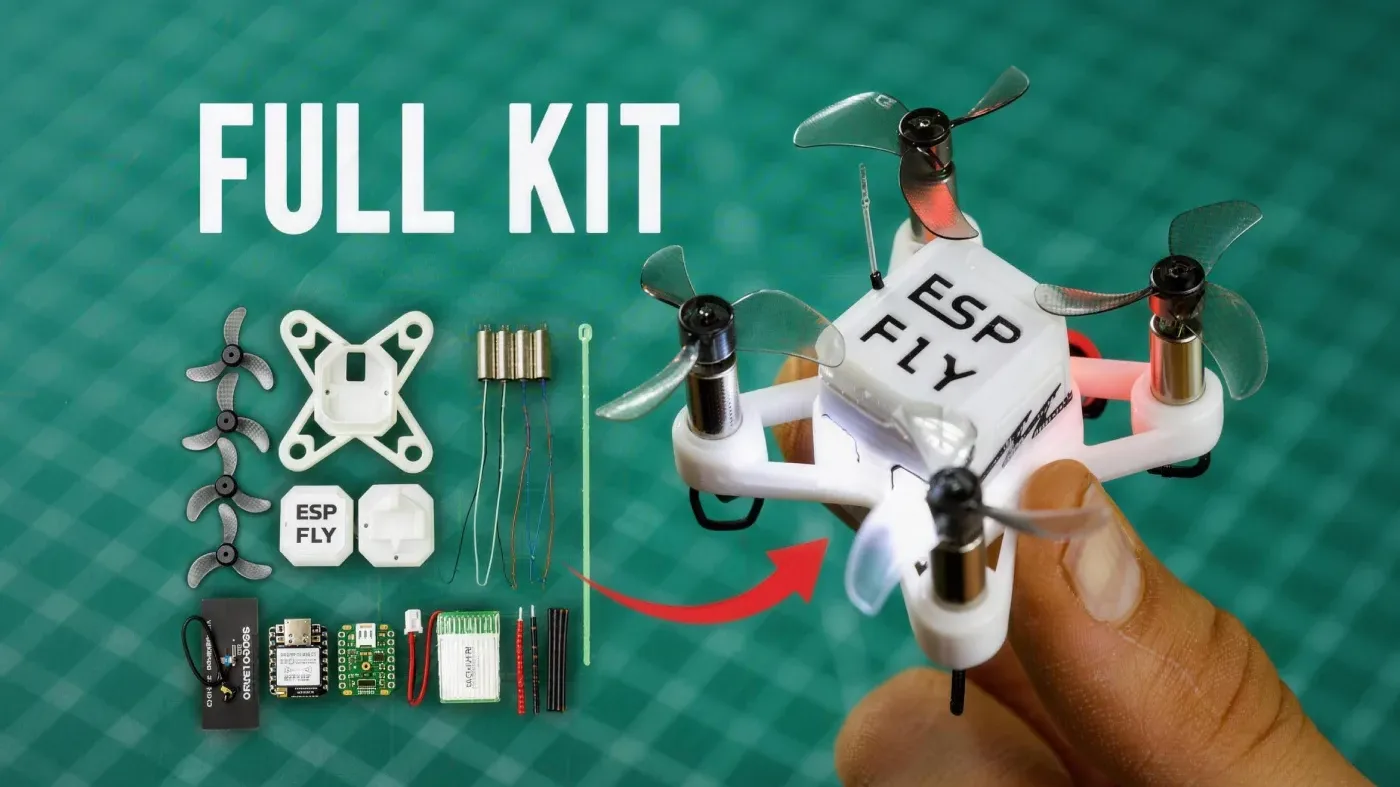
ESP-FLY Complete Guide: Build, Fly, and Program a DIY Micro Drone with ESP32-S3 (2026 Guide)

Sep 5, 2026
Musk's G20 Prediction: 1 Billion Humanoid Robots in 10 Years — Why Robotics Skills Matter in 2026
Jul 21, 2026
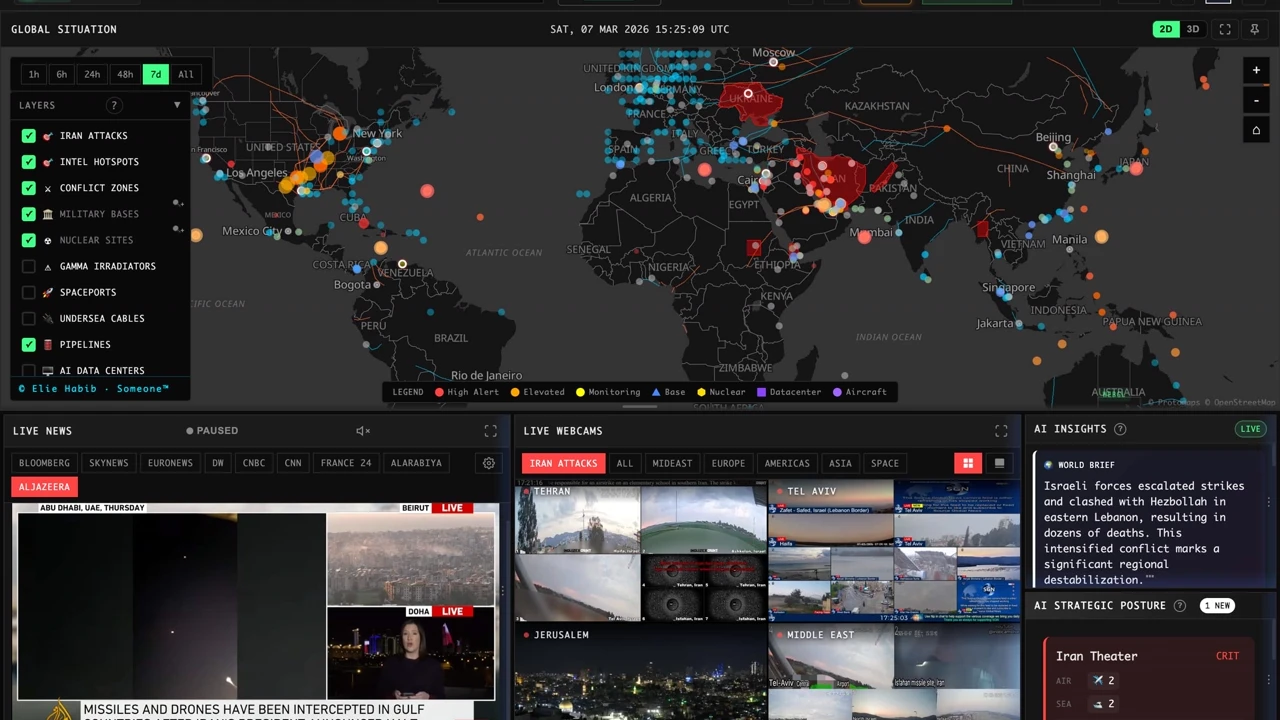
WorldMonitor Complete Guide 2026: The Strongest Open-Source Geopolitical AI for Real-Time Global Awareness in One Dashboard
Aug 20, 2026
Berd Complete Guide 2026: Block's Open-Sourced #1 Internal Tool for Building Your "Dream Team" of AI Agents
Jul 21, 2026
Buzz Complete Guide 2026: Jack Dorsey (Block)'s Open-Source Workspace Where Humans and AI Agents Work in the Same Room

Aug 12, 2026
OpenSEO Complete Guide 2026: How to Use the Open-Source Alternative to Semrush and Ahrefs, Plus DataForSEO Integration